Newcastle’s coastal climate accelerates roof deterioration through salt exposure, strong onshore winds, intense UV and prolonged humidity. Without the right materials, maintenance and protection strategies, even relatively new roofs can fail far earlier than expected. Based on our experiences here at Town and Country Roof Restoration, many costly roof failures we see could have been avoided with a better understanding of how local conditions affect different roofing systems.
This article is for homeowners, particularly those in coastal and near-coastal suburbs, who want to protect their property, avoid repeat repairs and make smarter long-term decisions about their roof. Getting this right is critical if you want to minimise leaks, corrosion and premature replacement, especially when considering roof restoration in Newcastle.
We’ll explain how salt air, wind, sun, rain and humidity impact roof lifespan; which materials perform best in coastal conditions; the most common problems we see on local homes; and which maintenance, repair and restoration options genuinely extend roof life in this environment.
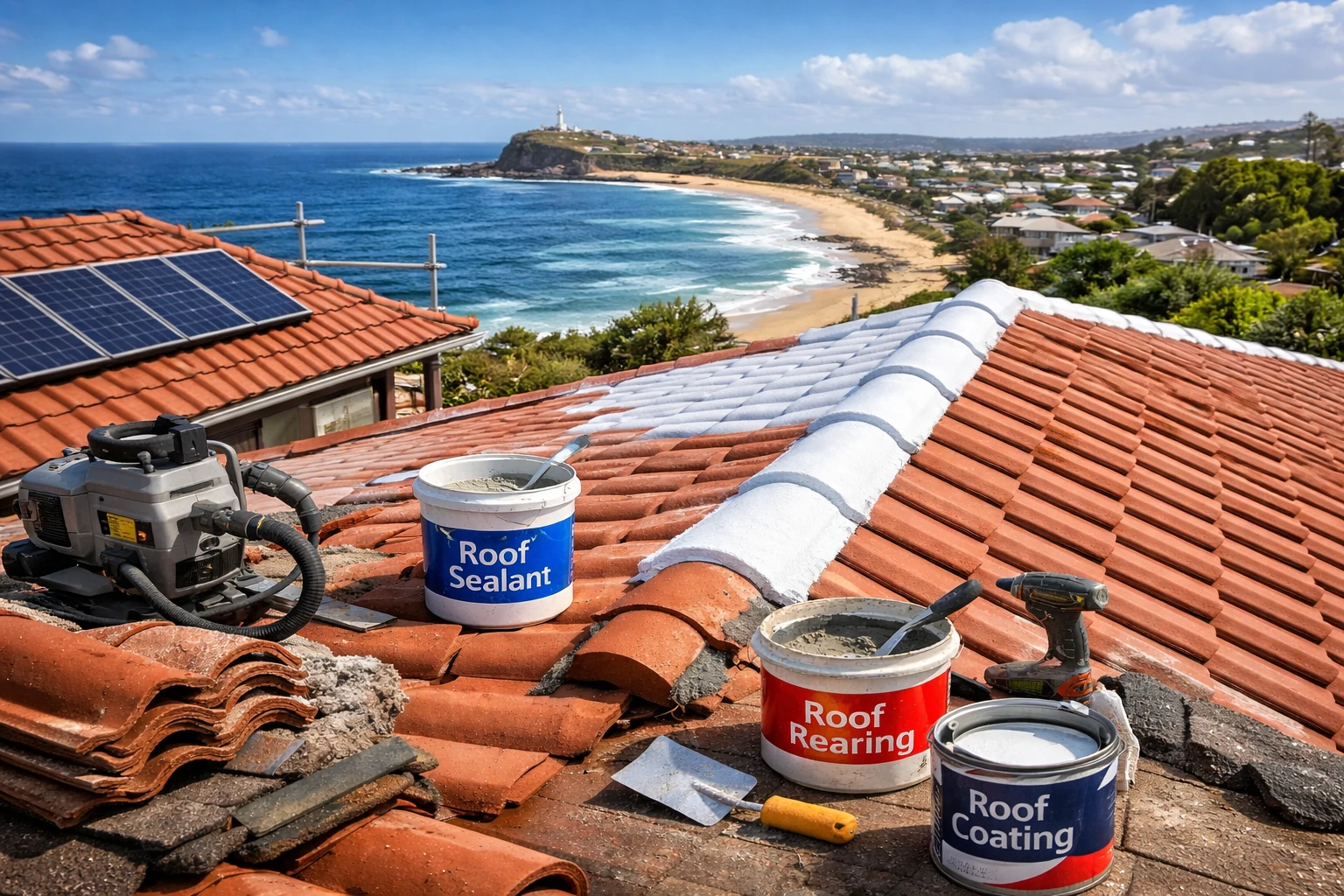
Fine salt particles are carried inland by prevailing sea breezes, settling on roofs and remaining there long after the wind has dropped. When combined with high humidity, this salt creates a corrosive layer that accelerates material breakdown, even on roofs that appear visually sound. Eventually, this exposure shortens the effective lifespan of many common roofing systems.
Salt and moisture work together to trigger issues that are often hidden in the early stages. Metal components can begin to corrode beneath coatings, fixings can weaken and tiles can absorb moisture that leads to cracking and surface decay. These processes are gradual but relentless, which is why coastal roofs often fail earlier than similar roofs further inland. Understanding this interaction is essential to preventing avoidable damage and planning effective long-term protection.
Coastal position means most homes are exposed to salt-laden air, even several kilometres inland. Prevailing onshore winds carry fine sea spray across suburbs, and as moisture evaporates, salt crystals are left behind on roofing surfaces, flashings, fixings and gutters. This constant salt loading accelerates corrosion and coating breakdown far more quickly than in non-coastal regions. As a result, roofs often age faster than homeowners expect.
Humidity compounds the issue throughout the year. Frequent shifts between warm, humid days and cooler nights create repeated condensation cycles within roof cavities and on underside surfaces. When ventilation is limited, moisture lingers and combines with salt deposits, accelerating rust, mould growth and material fatigue. Add strong coastal winds and wind-driven rain, and moisture is more easily forced into joints, laps and penetrations where damage can remain hidden for years.
Certain warning signs appear consistently in roofs affected by salt and humidity. Early deterioration often shows up on exposed surfaces, particularly on windward sides facing the ocean. Protective finishes tend to fail unevenly, allowing moisture and salt to penetrate underlying materials. These surface changes are often the first visible indicator that the roof is under coastal stress.
Here are some of the signs:
As damage progresses, issues often extend inside the home. Brown ceiling stains, bubbling paint near cornices and musty odours from the roof space suggest moisture intrusion. In more advanced cases, inspections reveal damp insulation, mould on battens and rafters and corrosion of concealed metal components. These problems are frequently missed from ground level, allowing deterioration to continue unchecked.
One of the challenges with coastal roof deterioration is that much of the damage develops out of sight. Salt and moisture commonly penetrate small gaps around fixings, flashings and penetrations, where they remain trapped and continue to corrode materials internally. From the street, a roof may still appear serviceable while critical components underneath are steadily weakening. This hidden degradation is common after storms and periods of prolonged humidity.
Because the damage is gradual, many only become aware of the problem once leaks, internal water damage or structural issues appear. By this stage, repairs are often more extensive and costly than if early intervention had occurred. In Newcastle’s climate, proactive inspections, targeted maintenance and timely restoration have a role in preventing minor coastal wear from escalating into major roof failure.
Roofs rarely fail due to a single dramatic event. This slow, cumulative damage is often underestimated, allowing small issues to compound into major failures. With the right approach, much of this deterioration can be delayed or prevented altogether.
From what we see across local homes, the difference between a roof that struggles after a decade and one that performs reliably for 20 to 25 years is consistent preventative care. Regular inspections, timely cleaning and early repairs interrupt the cycle of salt buildup and moisture retention. These help preserve coatings, protect fixings and prevent hidden corrosion from taking hold. In a coastal environment, maintenance is not optional; it is what determines whether a roof reaches its full intended lifespan.
Salt does more than sit on the roof surface; it actively accelerates corrosion and breaks down protective finishes. Fine salt particles settle into joints, around fixings and along ridge lines, where they remain long after rain has dried. This buildup causes metal components to rust, coatings to chalk and thin and exposed areas to deteriorate far faster than expected. Even roofs that appear sound from the street often show early-stage damage once inspected closely.
For tiled roofs, salt and airborne grime cling to porous tile surfaces and ridge pointing, trapping moisture and encouraging micro-cracking. On metal roofs, salt crystals sit against paint layers and any exposed steel, turning small scratches into corrosion points. Effective cleaning in coastal areas is not about appearance alone; it is a preventative measure. Controlled, low-pressure washing removes debris without stripping coatings or forcing water into vulnerable areas, helping preserve roof integrity and extend service life.
Small defects can escalate quickly if left unaddressed. Minor issues such as hairline cracks in ridge capping, slightly lifted flashings or loose fixings allow moisture to enter in small but persistent amounts. With regular humidity and wind-driven rain, this moisture does not dry easily and begins affecting battens, insulation and internal linings. What starts as a minor defect can soon develop into widespread damage.
The most effective way to limit long-term deterioration is to address problems before visible leaks appear. Early intervention targets the entry point rather than the consequences inside the home. Typical early repairs include resealing flashings, re-bedding or re-pointing ridge tiles, replacing corroded screws and touching up failing coatings. These measures are far more cost-effective than structural repairs and reduce the risk of hidden moisture damage.
Roofs in coastal areas are subjected to higher environmental stress than those further inland, which makes inspection timing especially important. Salt exposure, strong winds and intense UV can cause gradual movement and material fatigue that is not immediately obvious. Long gaps between professional inspections increase the risk of small issues going unnoticed until they become serious. In this environment, a proactive inspection schedule is essential.
For most coastal homes, an annual roof inspection provides a reliable baseline for monitoring condition and wear. Additional checks after major storms or periods of strong onshore winds help identify wind-driven rain entry, dislodged components and early corrosion. New roofs also benefit from an inspection within the first few years, when coating or installation weaknesses may begin to show. Regular inspections shift roof care from reactive repairs to active condition management, which is key to extending roof lifespan in coastal areas.
Not all roof repairs or restorations deliver the same long-term results. Salt exposure, humidity, wind and UV place ongoing stress on roofing systems, which means quick fixes often fail prematurely. Effective restoration must address existing damage and the environmental forces that caused it in the first place. Without this broader approach, problems are likely to resurface within a few years.
From what we see across local homes, durable restoration solutions focus on protection as much as repair. This includes properly treating corrosion, sealing vulnerable entry points and applying coatings designed for coastal conditions. When restoration work is matched to the roof type and exposure level, it can extend roof lifespan and delay the need for full replacement. In harsh coastal climates, long-term performance depends on using proven systems rather than short-term cosmetic fixes.
Standard roofing products often fail to deliver their advertised lifespan. What performs adequately elsewhere can deteriorate rapidly near the coast if corrosion resistance is not a priority. For this reason, material selection must be based on proven performance in high-corrosion zones, not just general suitability claims.
For metal roofing, long-term durability depends on the base material and the coating system. High-build, marine-grade pre-painted steels designed for very high corrosion environments perform far better than low-spec galvanised options. Equally important are compatible, corrosion-resistant fasteners, as fixings are often the first point of failure on coastal roofs. On tiled roofs, restoration focuses on replacing salt-softened bedding and pointing, then applying high-quality, UV-stable acrylic membranes that protect porous surfaces without breaking down under sun and salt exposure.
Effective roof protection should not come at the expense of household health or the surrounding environment. Modern low-VOC, water-based primers, sealants and membranes now provide excellent durability while minimising odour, chemical runoff and indoor air quality concerns. In coastal areas, these products also offer better flexibility under temperature changes, reducing cracking and premature failure. Selecting breathable systems is important to prevent trapped moisture and condensation issues within the roof structure.
Equally critical is the maintenance strategy that follows restoration work. In a coastal climate, no roof should be treated as a “set and forget” system. A realistic plan includes gentle cleaning to remove salt deposits, routine inspection of flashings and sealants and early touch-ups where coatings show wear. When carried out every one to two years, this light, preventative maintenance extends the life of the restoration and reduces reliance on harsh chemical treatments over time.
In the end, coastal lifestyle puts unique demands on residential roofs, with salt, wind, UV and moisture all accelerating wear if the roof is not designed and maintained for marine conditions. Long-term performance comes down to using corrosion-resistant materials, ensuring proper installation and ventilation and staying ahead of issues through regular inspections, cleaning and early repairs. Shortcuts and cosmetic fixes rarely last in this environment; durability requires a preventative, system-based approach. For homeowners wanting expert guidance and proven solutions tailored to local conditions, we here at Town and Country Roof Restoration provide roof assessments, restoration and maintenance strategies.
No job and no roof is too big for our team of roofing contractors. We have the experience, skills and equipment to make your roof look and function the way you’d like it to.
Whether you want to paint your roof or remove asbestos, we can help!

