Storms can weaken a roof long before water stains appear on the ceiling. By the time a leak reaches the interior, the damage above is often extensive and far more expensive to repair. At Town and Country Roof Restoration, we focus on helping homeowners recognise the early warning signs on the outside of the home so they can act before minor storm damage grows into structural issues. In this article readers will see how different types of storms affect roofing materials, how to spot subtle changes on tiles, metal sheets and flashings and why prompt inspection after severe weather is essential for the long-term health of the property.
The following insights will walk through the most common forms of storm-related roof damage, from lifted or cracked tiles and displaced ridge capping to hail bruising, corrosion and wind-driven debris. Readers will learn which signs can be checked safely from the ground, which symptoms suggest hidden damage and when it is time to involve a qualified roofer for a closer inspection. By understanding how to identify problems early, homeowners can protect their roof system, reduce the likelihood of interior leaks and preserve both the value and comfort of their home.
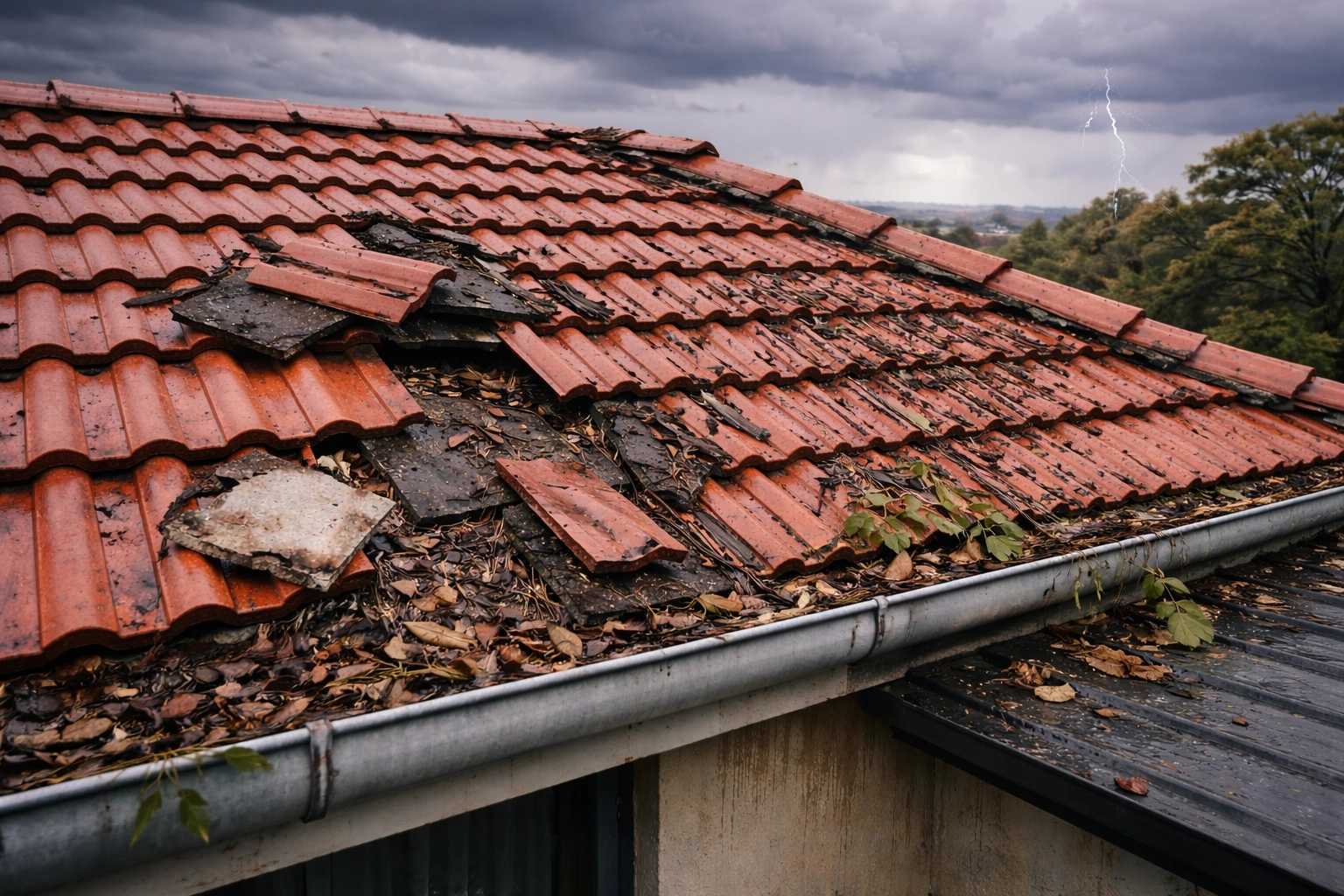
Before leaks show up inside, there are usually clear signs on the outside of the home that a storm has compromised the roof. Catching these early is the best way to prevent water from finding a path into ceilings, wall cavities and insulation. Town and Country Roof Restoration recommends a careful ground-level inspection after any severe wind, hail or heavy rain event so issues can be repaired while they are still minor.
Many problems are visible without climbing onto the roof. With a pair of binoculars and a slow walk around the property, most homeowners can spot common indicators of storm damage. Anything that looks out of place, dented, cracked or shifted is a signal that the roof may no longer be watertight.
One of the clearest warning signs is visible damage to the roofing material itself. After a storm it is important to look for:
If the roof has asphalt shingles, dark bare patches where the surface granules are missing suggest hail or heavy debris impact. Large areas of smooth shiny shingle surface indicate the protective layer has been knocked off, which shortens the life of the roof and can lead to faster water absorption.
On tiled roofs, broken corners, visible chips or tiles that look out of line often mean wind has lifted them or debris has struck them. Even a slightly raised tile can allow driven rain to track underneath and eventually enter the roof cavity.
Storms often cause indirect damage by affecting the metal components around the edge of the roof. Licensed roof contractors advise checking gutters, downpipes and fascias for signs of impact or movement.
Look for sagging or detached gutters, joints that are pulling apart or sections that are visibly bent. Hail can leave small round dents in metal gutters and downpipes which indicate the same hail may have hit roofing sheets or flashing. Overflow stains on external walls under the gutter line suggest that during heavy rain, water has been forced over the edge instead of through the system, which can back up under the roofing.
Metal flashings around chimneys, skylights and along roof valleys should sit flat and tight. If they appear twisted, lifted or creased, this is a strong clue that wind or debris has broken the seal. Any visible gap between flashing and the roof surface is a potential future leak point.
The way leaves and branches sit on the roof after a storm can also reveal hidden problems. Large branches resting on the roof may have cracked tiles or dented metal sheets where they landed. Accumulated debris trapped in valleys or behind chimneys can hold moisture against the roof surface, which increases the risk of slow seepage.
From the ground, sight along the roofline. Any visible sagging or unevenness in ridges or eaves can indicate structural stress from wind uplift or heavy water loading. While minor, this type of change should be assessed promptly before it worsens.
Finally, check exterior walls and soffits under the eaves for new water stains, bubbling paint or discolouration after a storm. These marks often appear before any water shows up inside and are an early signal that moisture is escaping from the roof system and tracking down the structure. If any of these warning signs are visible, Town and Country Roof Restoration recommends arranging a professional roof inspection as soon as possible.
Not all storm damage shows up as missing tiles or obvious ceiling stains. Often the first clues appear quietly inside the roof space long before water drips into a room. Spotting these subtle signs early allows professional roof contractors to repair problems while they are still small and far cheaper to fix.
Homeowners do not need to climb on the roof to catch most of these warning signs. Many can be seen from inside the home or by safely inspecting the roof space if access is available. Regular checks after heavy rain, hail or strong wind help prevent surprise leaks months later.
A persistent musty or damp smell that lingers after rainy weather can indicate hidden moisture in the roof cavity or insulation. Even if no stains are visible, the odour often appears first when timber framing or plasterboard starts to absorb moisture from minor storm damage.
Rooms directly under the roof, such as top-floor bedrooms or hallways, are usually affected first. If the smell is strongest near light fittings, ceiling vents or along the top of walls, it may mean moisture is collecting above those points. Our team often finds that what a homeowner thinks is “just a musty old house smell” is actually early mould growth caused by a small storm-related leak.
Ceiling damage from storms does not always appear as a clear brown water mark. Early on it can look like:
These changes often occur where water is slowly seeping along timber or insulation from a damaged tile flashing or ridge capping. The area may feel cooler or slightly damp to the touch after rain even if the surface still looks mostly normal. If light fittings flicker or a smoke alarm casing shows condensation after storms, this can also be a sign that moisture is entering the cavity above.
If there is safe access to the roof space, a quick visual check after a major storm can reveal issues long before interior damage appears. Insulation that looks flattened, clumped or darker in patches may be holding moisture from a slow leak. Over time this reduces its effectiveness and keeps the roof space damp, which encourages mould.
Timber trusses or battens with dark streaks, freshwater marks or a white powdery residue can indicate repeated wetting and drying. Small patches of surface mould on the underside of the roof lining or on rafters usually point to persistent dampness, not just a one-off humid day. Licensed roof contractors often recommend professional assessment if any of these signs are visible since the actual entry point on the roof is often several metres from where the moisture shows up inside.
Some storm damage is obvious, but a lot of the issues that lead to interior leaks are subtle and hidden. A professional inspection by licensed roof contractors can uncover problems that are impossible to see from the ground or without roofing experience. Knowing when to call in an expert helps homeowners fix issues early rather than waiting until water stains appear on ceilings.
Not every shower needs an inspection, but certain conditions and warning signs mean a qualified roofer should attend as soon as it is safe. Acting quickly after these types of storms or symptoms can prevent minor roof damage from turning into major internal repairs.
Any time the roof is hit by intense weather, the chances of hidden damage increase. A professional inspection is recommended after:
Hail can bruise or crack tiles and dent metal roofing in ways that are hard to see from the ground. Wind can lift cappings, shift ridge tiles or loosen flashings without leaving visible gaps. A roofer will check high-stress areas such as ridges, hips, valleys and around penetrations, where leaks usually start first.
Any sign that water may already be finding a way in is a clear reason to book a professional inspection. Homeowners should call a professional roof contractor if they notice:
Outside the property, sagging gutters overflowing during normal rain or staining on external walls under roof edges can indicate hidden roof or flashing issues. A roofer can trace these symptoms back to specific faults such as cracked pointing, lifted laps on metal sheets or blocked flashings.
Climbing on a wet or damaged roof is dangerous. If the roof is steep, multi-storey or has fragile tiles, no one should attempt to walk on it after a storm. In these situations a professional inspection is not only useful but essential for safety.
Town and Country Roof Restoration uses proper safety equipment and knows how to walk on different roof types without causing further breakage. Inspectors can also use photos to show homeowners exactly what they have found, such as hairline tile cracks, broken ridge capping or separated sealant around vents, so repairs can be planned with confidence.
In the end, identifying roof storm damage in Newcastle before it turns into an interior leak is really about being proactive, consistent and informed. Throughout this article, we’ve walked through what different types of storms actually do to a roof, the early warning signs to watch for from the ground and inside your home and the specific trouble spots that almost always deserve a closer look: shingles, flashing, gutters, valleys, penetrations and the roof’s structural lines. We’ve looked at how minor issues like lifted shingles, granule loss, dented metal, or small punctures can quietly evolve into soaked insulation, stained ceilings, mould growth and costly structural repairs if they’re not addressed quickly.
We’ve also discussed the limitations and risks of a DIY inspection, why safe, routine checks after major weather events matter and how professional assessments, photo documentation and clear records can strengthen your position with insurers and help you plan timely maintenance. The core message is simple: storm damage rarely starts as a disaster, it starts as something small that could have been found and fixed. By knowing what to look for, acting early and partnering with a trusted roofing specialist when you’re unsure, you can protect your home, control your costs and extend the life of your roof long before the first drip ever appears inside.
No job and no roof is too big for our team of roofing contractors. We have the experience, skills and equipment to make your roof look and function the way you’d like it to.
Whether you want to paint your roof or remove asbestos, we can help!

