Roof valleys are responsible for directing large volumes of rainwater away from a roof. Because they sit at the junction where two roof slopes meet, valleys experience concentrated water flow and are often among the first areas to show signs of deterioration. When problems develop, they can quickly lead to leaks, structural damage and costly repairs if they are not addressed promptly. For Newcastle homeowners, roof repair can become urgent when a failing valley starts allowing water into the roof cavity. Recognising the early warning signs can help prevent minor damage from escalating.
This guide explains the most common indicators that a roof valley may need attention. It also outlines the difference between situations that may only require repairs and those where replacing the affected valley section may be the more practical solution. With experience in identifying and resolving roofing issues, Town and Country Roof Restoration understands the importance of addressing valley defects before they compromise the wider roof structure.

A roof valley is one of the most important features on a pitched roof because it is where two roof slopes meet and channel water away. It is also one of the first places to develop leaks when it is worn, blocked, damaged or incorrectly installed. Understanding what a roof valley is and how it works makes it easier to spot problems early and protect the rest of the home.
In simple terms, a roof valley is both a structural and waterproofing element. It guides large volumes of water off the roof during rain and helps prevent water from penetrating the roof surface at one of its most vulnerable junctions.
A roof valley forms wherever two roof planes intersect to create an internal angle. Viewed from above, it appears as a line running down the meeting point of those slopes from the higher ridge to the lower eave or gutter. Roof designs with L-shaped sections, cross gables, dormers or multiple wings often include one or more valleys.
Because this intersection is a natural collection point for water, the valley must be detailed carefully. Under the roof covering, there may be sarking, roof underlay or additional flashing details, depending on the roof type, pitch and installation requirements. On many roofs, a metal valley flashing is installed along the full length of the valley. The surrounding tiles or metal roof sheets are then cut and fitted neatly to each side.
When it rains, water runs down each roof slope towards the lowest point. The valley collects water from two or more roof planes and funnels it in a narrow path towards the guttering system. During a storm, the volume of water moving through a valley can be several times greater than on the surrounding roof surfaces.
A correctly built valley:
If the valley is damaged or blocked, water can overflow sideways under tiles, metal roof sheets or flashing and enter the roof cavity.
Roof valleys are constantly exposed to concentrated water flow, UV exposure and debris. This can cause them to wear faster than flatter roof areas. The cut edges of tiles along the valley can also be more vulnerable if they are poorly supported, cracked, displaced or exposed to repeated movement. Metal valley flashings can corrode, split or weaken as they age, especially if water is allowed to sit in them due to poor fall, built-up debris or surface damage.
Because a valley sits over a joint in the roof framing, a leak in this area can spread along rafters, battens and insulation before becoming visible inside the home. By the time water stains appear on ceilings, the valley may already have significant deterioration. For this reason, valleys are among the first areas inspected during a roof check, and any sign of wear, rust, movement or displacement should be taken seriously.
The roof valley is one of the most vulnerable areas for leaks because it channels a high volume of water every time it rains. Rust, corrosion, debris build-up or visible damage in this area can be an early warning sign that the valley is starting to fail. Regularly checking these signs helps prevent minor deterioration from turning into major water ingress inside the home.
Inspection should focus on the metal valley flashing and the surrounding roof surface. Even small imperfections can quickly worsen under constant water flow. Spotting changes in colour, texture and surface condition around the valley is important, particularly after heavy storms or strong winds.
Roof valleys should never be inspected by climbing onto a wet roof. Any wet-weather checks should be made from the ground, from a safe covered vantage point or by a qualified roofer.
Metal valley flashings are designed to be durable, but constant exposure to water, trapped debris and coastal air can eventually lead to corrosion. Look closely for discolouration, such as reddish-brown patches on steel or dull white powdery deposits on galvanised surfaces. These are signs that the protective coating may be breaking down and the metal is starting to deteriorate.
Pitting or flaking on the metal surface is more serious. Tiny pinholes can allow water to track under the flashing and into the roof structure. Any visible holes, splits or lifting edges in the valley flashing generally indicate the need for professional repair or replacement. In coastal or industrial areas, corrosion can progress faster, so valleys in these locations may need more frequent inspection.
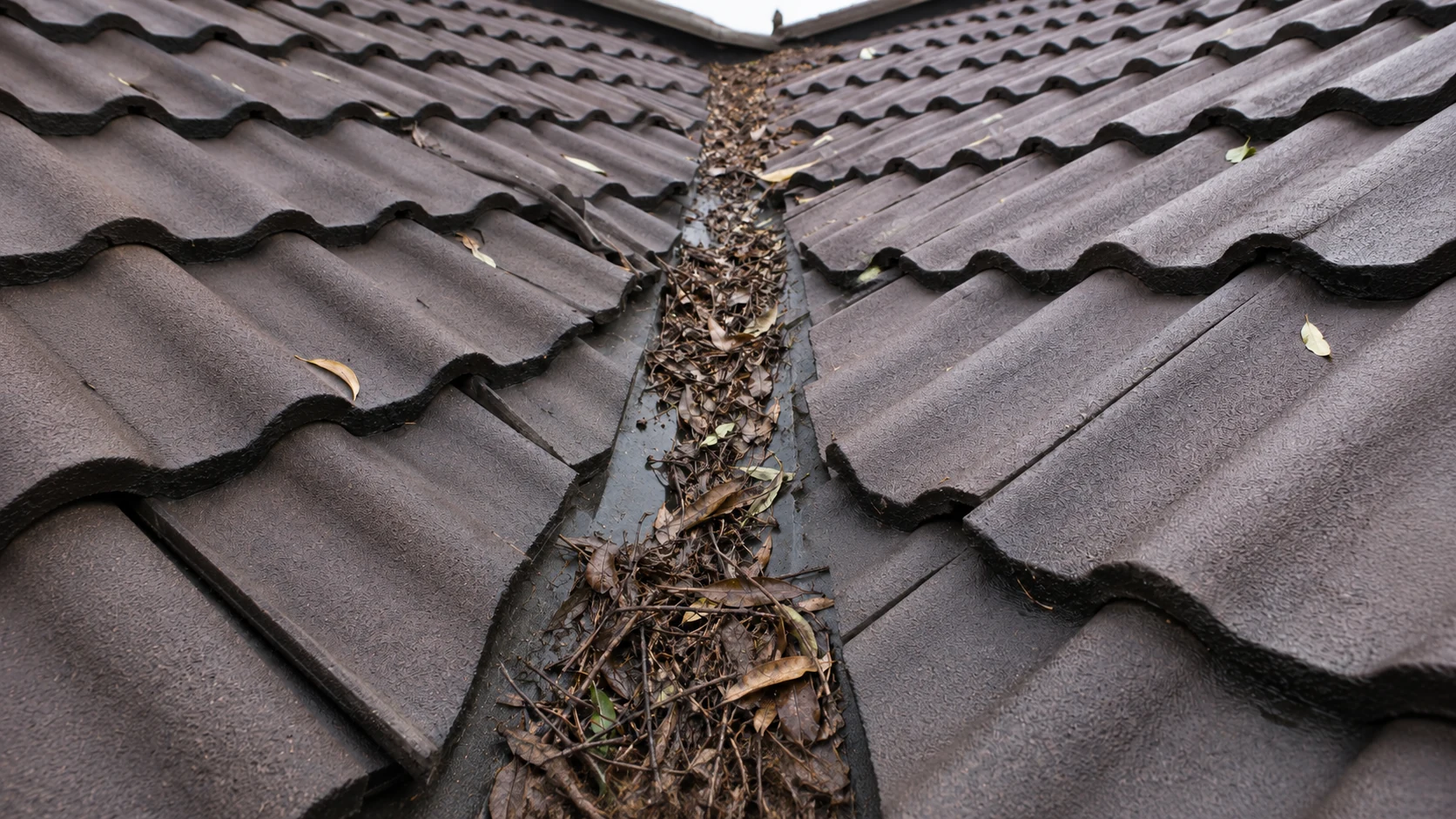
Roof valleys are natural catchment points for leaves, twigs, seed pods and dirt. When this material accumulates, it slows water flow and can cause water to dam and back up under tiles, roof sheets or valley flashing. Areas where debris appears matted or compacted are especially concerning because they can hold moisture against the metal and speed up corrosion.
Look for dark, damp stains or moss and lichen growth along the valley line. These may indicate that water is frequently sitting instead of draining freely. During heavy rain, check from a safe vantage point whether water is moving rapidly down the valley or pooling around obstructions. Any standing water in a valley is a red flag.
Regular cleaning of valleys is important for roofs under trees. Debris should be removed carefully to avoid damaging the flashing or dislodging tiles. If heavy build-up returns quickly, it may indicate a design issue, such as insufficient valley width or poor fall, that should be assessed by a roofing specialist.
Physical damage is another sign that the roof valley may need repair or replacement. Look for bent, buckled or dented valley metal that may create low spots where water collects. Check for gaps where the flashing meets tiles or roofing sheets, as these openings can allow wind-driven rain to enter.
Cracked or slipped tiles alongside the valley are a concern because they expose the underlay and edges of the flashing. On metal roofs, loose fixings near the valley and signs of sealant failure along joints can also indicate a problem. Water staining on fascia boards or under the eaves beneath the valley line may point to an issue higher up in the valley area.
Heavy rain is one of the clearest tests of a roof valley. Water that normally runs away quietly can quickly expose weak points through leaks, drips or visible overflow. Paying attention during a downpour can provide early warning of valley problems before they turn into major internal damage.
Wet-weather observation can be useful, but it should always be done safely. Homeowners should not climb onto a roof during rain, storms or high winds. A qualified roofer should inspect areas that cannot be viewed safely from the ground.
Inside the home, the first warning signs often appear around ceilings and upper walls near where the valley runs. During or shortly after heavy rain, look for:
These symptoms suggest water may be bypassing the valley’s intended path and finding gaps in the roof covering, underlay or flashing. A leak that only appears during very heavy rain can indicate limited valley capacity, partial blockage or small defects that become overwhelmed when water volume increases.
If a drip appears, place a container to catch the water and note the timing, location and rainfall conditions. Details such as whether the leak only occurs during wind-driven rain can help a roofer trace the likely failure point in the valley system.
Outside, a healthy valley should channel water smoothly into the gutters with no visible spillage. During heavy rain, safely observe from the ground and look for:
Overflow from the middle of the valley often indicates a blockage from leaves or debris, a valley design that is too shallow or narrow, or damaged flashing that is no longer guiding water correctly. Rusted or deformed valley metal can also create low spots where water pools and spills sideways into the roof structure instead of draining into the gutter.
Patterns in when leaks occur provide strong clues about the condition of the valley. Leaks that only show during the heaviest downpours often point to capacity or overflow problems. Leaks during moderate rain may indicate more advanced deterioration, such as:
Repeated leaks in the same location, even if minor, justify prompt professional assessment. Water intrusion through roof valleys rarely improves on its own and can compromise insulation, electrical fittings, ceiling linings and internal framing if left unchecked.
Deciding between a repair and replacement depends on how widespread the damage is and what is causing the problem. A targeted repair can extend the life of the valley when the issue is minor and localised. However, if water has repeatedly penetrated the underlying roof structure or the valley flashing has deteriorated across a large area, replacing the affected valley section is often the more reliable option.
The key is to assess not just the visible surface, but also the flashing, sarking or underlay, tiles, fixings and timber beneath. Superficial problems can often be fixed. Recurring leaks, widespread corrosion or structural deterioration suggest the valley has failed more extensively.
Localised surface damage that has not yet led to extensive water ingress is often suitable for repair. Common repairable situations may include:
A repair might involve refitting or replacing a limited number of tiles, cleaning and treating minor rust, resealing joints or improving debris management around the valley. The sarking or underlay should still be intact, and there should be no signs of sagging, softness or moisture damage in the surrounding roof structure.
If leaks have just started and are confined to a short section of the valley, quick intervention may resolve the issue without full valley replacement. Timely repairs help prevent repeated wetting of the roof frame, which is often what leads to more invasive work.
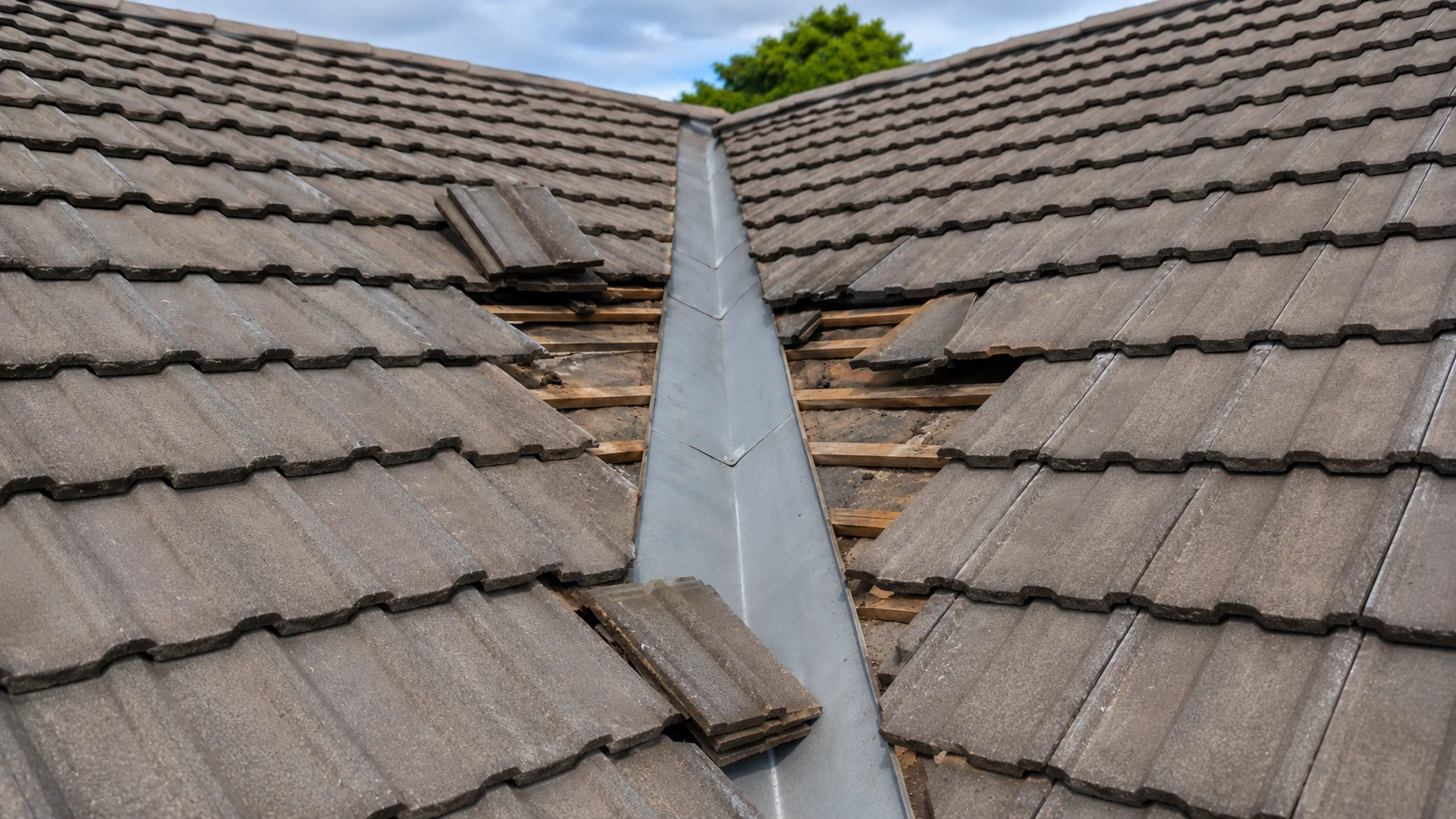
A roof valley may need replacement once the primary waterproofing elements have reached the end of their service life or have been compromised over a large area. Indicators include:
If the valley metal is thin, heavily pitted or has pinhole leaks, it is usually more cost-effective and reliable to replace the affected length rather than patching multiple weak sections. Likewise, if removing tiles for inspection reveals damp or decayed timber, the valley assembly may have been allowing water through for some time and more substantial work may be required.
The overall age and condition of the roof should influence the decision. A focused valley repair is often sensible if the roof is otherwise sound. If the roof is approaching the end of its expected life, replacing the valley section may be a good opportunity to upgrade materials, improve detailing and reduce the risk of future leaks.
A professional inspection that includes checking the tiles or roof sheets, valley flashing, sarking or underlay and surrounding timber is essential. This helps determine whether a repair will be durable or whether replacement is the safer and more cost-effective solution.
Roof valleys protect a property from water damage, yet they are often subjected to more wear and stress than many other sections of the roof. Rust, corrosion, debris accumulation, damaged flashing, recurring leaks and overflow during heavy rain are all signs that a valley may no longer be performing as intended. Recognising these issues early allows repairs to be carried out before moisture reaches the roof structure and interior spaces. Whether the solution involves targeted repairs or replacement of the affected valley section, a thorough assessment is essential to ensure the underlying cause is properly addressed.
No job and no roof is too big for our team of roofing contractors. We have the experience, skills and equipment to make your roof look and function the way you’d like it to.
Whether you want to paint your roof or remove asbestos, we can help!

