Roof restorations are a significant investment, and most homeowners rightly expect them to protect their property for many years. Yet in too many cases, fresh coatings fail early, leaks return or roofing materials continue to deteriorate far sooner than they should. When that happens, it is rarely a matter of bad luck. More often, it comes down to rushed preparation, unsuitable products, poor workmanship or a roof that was never a good candidate for restoration in the first place. At Town and Country Roof Restorations, we see firsthand how early shortcuts can lead to expensive problems later.
In this article, Town and Country Roof Restorations looks at the main reasons roof restorations fail prematurely and how those failures can often be avoided. Poor diagnosis, inadequate preparation, unsuitable products and rushed application can all shorten the life of a restoration and leave homeowners paying for problems twice.
By understanding what causes early failure, homeowners can better assess quotes, ask informed questions and choose a roof restoration in Newcastle that is built to last.
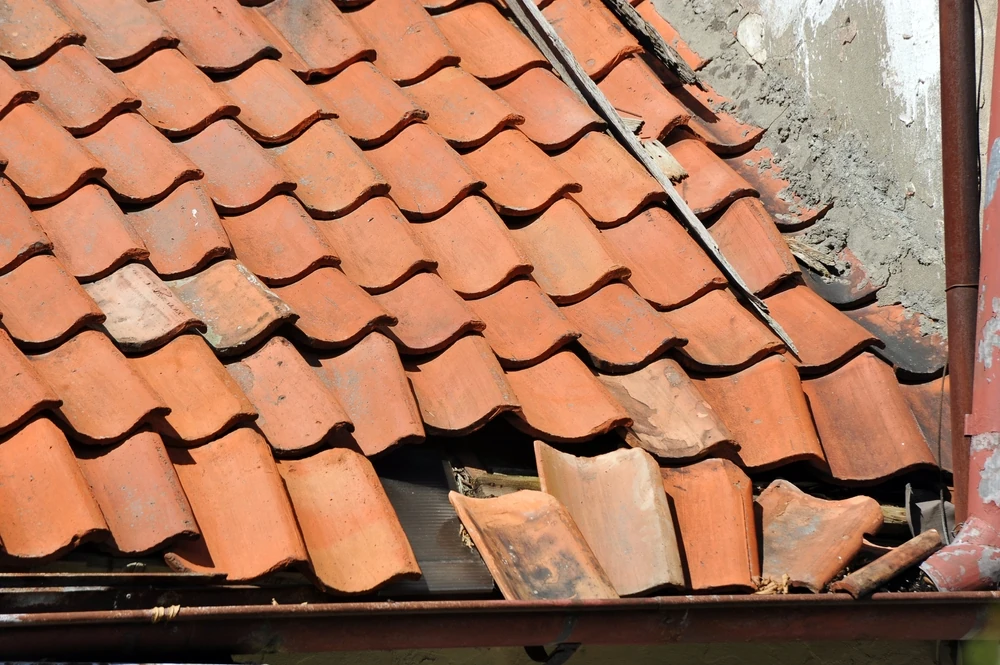
A proper roof restoration is much more than a quick clean and a coat of paint. It is a structured process that addresses existing issues, improves weather resistance and restores the roof’s appearance so it can continue performing for many years. When completed properly, the roof should be watertight, structurally sound and able to handle local weather conditions.
Roof restoration specialists follow a clear sequence of inspection, repair, preparation and coating. Rushing or skipping any of these stages is one of the most common reasons restorations fail earlier than expected.
Every quality restoration begins with a detailed inspection. The roofer should look for cracked or loose tiles, rusted metal sheets, worn pointing, damaged flashing, soft or rotted timber, blocked valleys and signs of water ingress in the roof space. Previous coatings should also be assessed to determine whether they are peeling, chalking or incompatible with new products.
Preparation is just as important as the repair work itself. This usually includes:
If preparation is rushed or incomplete, even a high-quality coating system can fail through peeling, blistering or poor adhesion.
A proper restoration addresses minor structural and waterproofing issues before any cosmetic work begins. For tiled roofs, this usually means replacing broken or porous tiles, re-bedding loose ridge caps where required and re-pointing ridges with a flexible pointing compound that can accommodate minor movement without cracking.
For metal roofs, it often involves treating surface rust, replacing badly rusted sheets or screws and securing or replacing loose fixings. Flashings around chimneys, skylights and wall junctions should also be checked and repaired or replaced where they have deteriorated or lifted.
Roof restoration specialists also look for less obvious problems, such as cracked valley irons, failed seals around penetrations and poorly executed previous repairs. Dealing with these issues at the restoration stage helps prevent small leaks from becoming major internal damage later.
Once repairs are complete, the roof needs to be primed with a product suited to the roof material and its condition. Tile roofs often require a penetrating sealer to stabilise the surface, while metal roofs may need a rust-inhibiting primer. Using the wrong primer, or skipping this step altogether, can cause the topcoats to fail well before their expected lifespan.
A proper restoration uses a complete coating system from a reputable manufacturer rather than a single generic paint.
Typically, this includes:
Each coat should be applied at the correct film thickness, with enough drying time between coats and only under suitable weather conditions. Roof restoration experts follow product specifications carefully so the finished surface is durable, UV resistant and flexible enough to cope with expansion and contraction.
Most failed roof restorations can be traced back to a small number of avoidable mistakes. When these issues are addressed properly from the outset, a restoration is far more likely to reach its expected lifespan without leaks, coating failure or the need for major rework.
Roof restoration experts often see the same patterns repeated on jobs completed by others that have not lasted. Understanding these common causes helps homeowners ask better questions and choose contractors more carefully.
Poor surface preparation is one of the biggest causes of early restoration failure. If dirt, chalky paint, mould, moss, lichen or loose material remains on the roof, the new coating cannot bond properly.
Tiles or metal sheets need to be cleaned using the appropriate pressure to remove grime and unstable material without causing damage. Any flaking paint should be stripped back properly, and mould or lichen should be treated with a suitable biocide rather than simply washed off. Gutters and valleys should also be cleared so debris and wash water do not remain trapped on the roof.
When this stage is rushed, coatings often blister, peel or wear away unevenly, sometimes within only a few years.
A restoration is not simply a paint job. If the roof is not structurally sound and weatherproof before coating begins, water can still enter no matter how fresh the surface looks.
Common defects that should be repaired first include:
If these issues are ignored, leaks often return quickly. A neatly coated roof may still fail in the first heavy storm if ridge pointing is loose or flashing details have not been addressed. Professional roof restorers inspect for these underlying problems and fix them before any coating is applied.
Using the wrong coating system, or poor-quality products, is another major reason restorations do not last. Roof coatings need to suit both the roof material and the local climate. Concrete tiles, terracotta and metal all require different primers, preparation methods and membranes.
Lower-quality acrylics may chalk, fade or crack under strong UV exposure or repeated temperature changes. Incorrect primers can lead to peeling, especially on older oxidised metal. Sealants that are not UV stable can split and leave joints exposed.
Roofing specialists choose products that are designed for the roof substrate and proven to perform in Australian conditions. This helps ensure the entire system works together rather than depending on a single topcoat to do all the work.
Even good products can fail early if they are applied poorly. Common application problems include coating too heavily or too lightly, working in unsuitable weather or not allowing enough drying time between coats.
If coatings are applied in very hot, windy or damp conditions, the surface may dry too quickly while remaining soft underneath, which can lead to blistering or cracking later. Uneven coverage can also leave thin areas that wear through much faster than the rest of the roof.
A professional team follows the manufacturer’s specifications for film thickness, number of coats and weather conditions so the coating can cure properly and perform as intended.
When a roof restoration begins to fail, it often shows early warning signs before major leaking starts. Identifying these signs early can make the difference between a targeted repair and a much larger expense. Regular visual checks from the ground and occasional professional inspections can help detect problems before they escalate.
Homeowners should pay attention to changes in both the roof’s appearance and the way the home performs. If the roof looks noticeably different from how it did soon after restoration, it is worth investigating.
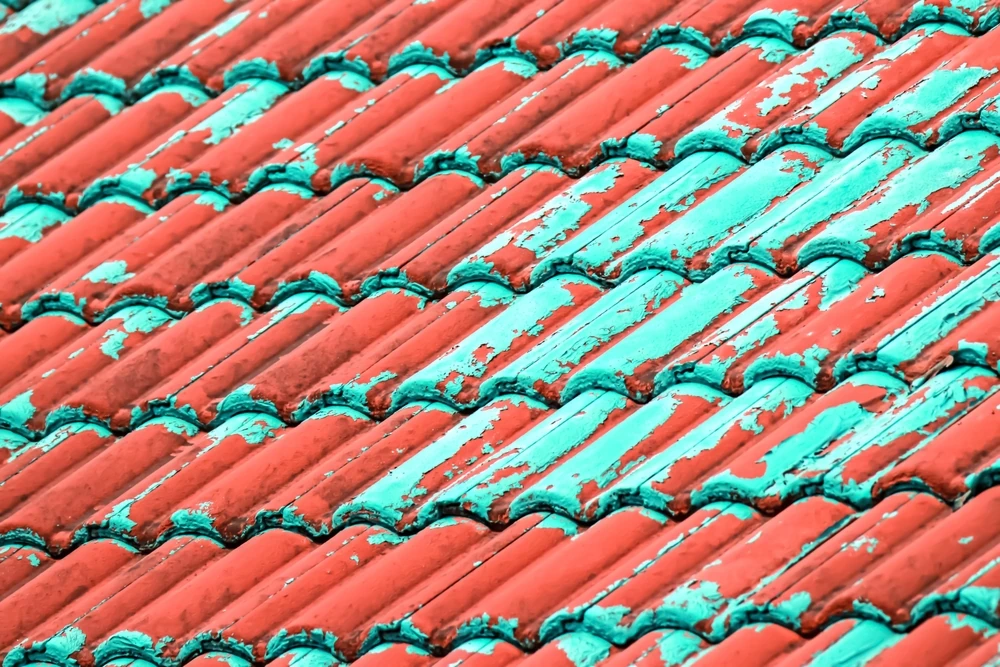
One of the clearest early signs of failure is deterioration in the coating. A quality membrane should remain even and well-adhered for years without breaking down prematurely.
If the coating begins to peel, blister or flake, especially on sections exposed to strong sun, it may point to poor preparation or unsuitable products. Patchy or uneven colour, where some areas appear dull and chalky while others remain consistent, can indicate uneven application or insufficient coverage. Once the coating starts to break down, the underlying surface becomes more exposed to UV and moisture.
After a proper restoration, leak-related problems should be resolved rather than simply shifting to another area. Ongoing water entry is a serious warning sign.
Brown ceiling stains, mould growth in corners or a musty smell in the roof space can all indicate that water is still getting in through flashing, cracked tiles or failed pointing. Drips that appear mainly during wind-driven rain often suggest poor sealing around ridge caps or roof junctions. If leaks continue within a couple of seasons of a restoration, something has likely gone wrong with the repair work, detailing or overall workmanship.
Even small damp patches should not be dismissed. Water can travel along timbers, insulation and framing, so the visible mark may not be directly below the actual entry point.
A well-restored roof should feel stable and secure, with all key components properly fixed in place. Visible movement or cracking suggests underlying issues have not been dealt with properly.
On tiled roofs, hairline cracks in ridge capping or pointing can allow water to enter and gradually loosen surrounding sections. Tiles that rattle in strong wind or sit unevenly may indicate that bedding repairs were incomplete or damaged tiles were left in place. On metal roofs, loose or missing screws, lifted sheets or excessive movement in hot weather can point to poor fixing or earlier corrosion problems.
A long-lasting roof restoration begins well before any coating is applied. It depends on the existing condition of the roof, the suitability of the materials and the care taken throughout the job. When those elements are handled properly, the result is a roof that not only looks refreshed but continues to protect the home reliably for years.
Roofing specialists focus on careful preparation, suitable products for local conditions and correct application. Homeowners can support that process by understanding what to expect and what standards to insist on from the beginning.
A proper restoration should always start with a detailed inspection. The aim is to identify and fix every underlying issue before cleaning, priming or coating begins. This should include checking:
Broken tiles should be replaced, loose metal sheets secured and rust treated appropriately. Ridge bedding and flexible pointing should be repaired or renewed where cracking or separation has occurred. If these issues are left unresolved, the new coating may fail early or the roof may continue to leak despite looking freshly restored.
Homeowners should expect a written scope of work that clearly lists these repairs rather than a vague promise to simply clean and paint the roof.
Many premature failures begin with poor preparation. High-pressure cleaning should remove dirt, moss, lichen, flaking paint and chalky residue so the new membrane can bond properly. On metal roofs, loose rust and unstable previous coatings should be stripped back to a sound surface.
After cleaning, the roof must be allowed to dry fully. Applying primer or membrane to a damp surface can trap moisture and lead to blistering or adhesion problems. In cooler or more humid conditions, drying times may need to be extended, and a reputable contractor will adjust the schedule rather than rush the job.
Bare metal should receive a corrosion-resistant primer, while porous tiles need a suitable roof sealer or primer to create a stable surface for the topcoats.
The products used on a roof are just as important as the workmanship. Roof restoration specialists specify membranes and primers designed for Australian UV exposure and suited to the roof type, whether concrete tile, terracotta or metal.
Coatings should be applied at the manufacturer’s recommended thickness, usually across multiple coats rather than one heavy application. Cutting corners by using fewer coats or thinning the product reduces durability and colour stability. Application should also only take place in suitable weather, avoiding wet conditions and temperature extremes.
Homeowners should also maintain the restored roof over time. Keeping gutters clear, trimming overhanging branches and arranging occasional inspections can help small issues, such as a cracked tile or lifted flashing, get picked up before they affect the restored finish.
Sometimes a roof is simply too deteriorated for restoration to be a sensible investment. In those cases, full replacement is usually the safer, more cost-effective and more reliable long-term solution. Knowing when a roof has reached that point can prevent homeowners from spending money on work that is unlikely to last.
A roof should be assessed based on its overall condition, not just how the surface looks. Any coating system is only as reliable as the structure and materials beneath it.
If the roof structure can no longer safely support itself or withstand local weather conditions, restoration will only be cosmetic. Common warning signs include:
In these situations, cleaning and coating the surface will not address the real problem. The roof may look improved for a short time, but structural movement will continue to cause tiles to shift, sheets to distort and coatings to crack. A full re-roofing solution that includes structural repair or replacement is the more responsible option.
Roof restorations depend on there still being a sound surface to restore. Once the roofing material itself has reached the end of its service life, restoration becomes little more than a temporary cosmetic measure.
Warning signs include:
If a large proportion of tiles need replacing or extensive metal sections have rusted through, the cost of patching and preparation can approach the cost of installing a new roof. In these cases, re-roofing is often the more durable long-term solution.
When a roof has a long history of leaking in multiple areas, there is often more involved than worn coatings or a few surface cracks. Ongoing moisture entry can damage:
If an inspection reveals mould, rot, delamination or evidence of multiple past patch repairs, a new restoration coating is unlikely to solve the problem. Water often continues to enter through concealed decay, old movement points or failing details that sit beyond the surface finish.
In most cases, premature roof restoration failure is not random. It is the predictable outcome of shortcuts in assessment, preparation, product selection, application or aftercare. A roof may look refreshed for a short time, but if the underlying issues were not properly addressed, the results rarely last.
A good restoration is a methodical process. It begins with an honest assessment of the roof’s condition, includes repairs to all relevant defects and uses the right system for the roofing material and local environment. For homeowners, the key is to ask clear questions, expect a detailed scope of work and treat restoration as a long-term investment rather than a quick cosmetic fix. That approach gives the roof the best chance of delivering durable, weather-tight protection for years to come.
No job and no roof is too big for our team of roofing contractors. We have the experience, skills and equipment to make your roof look and function the way you’d like it to.
Whether you want to paint your roof or remove asbestos, we can help!

