Roof problems often begin with small signs that are easy to overlook. As roof pointing ages, cracks, gaps and deterioration can affect how well the roof protects the home. Identifying these warning signs early can help reduce the risk of water entry, tile movement and more extensive roof repairs. For property owners considering roof restoration in Newcastle, understanding the condition of roof pointing can help identify when maintenance or repairs may be needed.
This article explains the common indicators that roof pointing is failing, how to distinguish normal ageing from more serious deterioration and when repointing or rebedding may be required. It also discusses the role of professional inspections and why Town and Country Roof Restoration can assess the condition of tiled roofs and recommend the most suitable solution.
Roof repointing is the process of renewing the external layer of material that seals the edges of ridge caps, hip tiles and other capping tiles. Over time, this pointing can crack, crumble or pull away from the tiles, weakening the roof’s weatherproof seal and allowing movement along the ridge line. Repointing restores that protective barrier so tiles remain secure and water is less likely to enter the roof space.
On many modern tiled roofs, flexible pointing compounds are used instead of older rigid cement-based pointing. These products are designed to allow slight movement caused by wind, temperature changes and normal building movement, while still helping to hold the ridge capping in place.
Traditional tiled roof construction uses a sand-and-cement bedding mortar to support ridge caps and hip tiles. The pointing layer sits over the exposed edge of the bedding and helps seal the joints against weather.
Repointing involves removing loose, cracked or deteriorated pointing, cleaning the affected areas and applying fresh pointing to the exposed joints around ridge caps and hip tiles. Flexible pointing products are usually trowelled or gunned into place and shaped to create a smooth, weathered finish.
Once cured, the new pointing forms a protective seal between the tiles and the bedding mortar. On older roofs, the process may also involve rebedding sections where the underlying mortar has failed before fresh pointing is applied.
The main purpose of repointing is to help keep water out. Failed pointing can allow wind-driven rain to track under ridge caps and into the roof space, which may lead to:
Repointing also helps keep ridge caps and hip tiles secure. When pointing breaks away, ridge caps can shift in strong winds, increasing the risk of tiles lifting, cracking or becoming dislodged. A secure ridge line reduces movement and helps protect the surrounding tile system.
A well-pointed roof can also help reduce pest access. Gaps along the ridge line may allow birds, rodents or insects to enter the roof space. Renewed pointing closes off these openings and helps maintain a cleaner, more secure roof cavity.
Cracked or missing pointing is often visible from the street, especially along the highest sections of the roof. Fresh pointing creates a cleaner roof line and can improve the overall presentation of the property.
Regular repointing at appropriate intervals can also help extend the life of a tiled roof by reducing moisture entry and limiting movement in the ridge capping. Modern roof tile systems commonly require ridge capping to be installed and maintained using suitable bedding and pointing methods, including approved flexible pointing products where specified by the manufacturer.
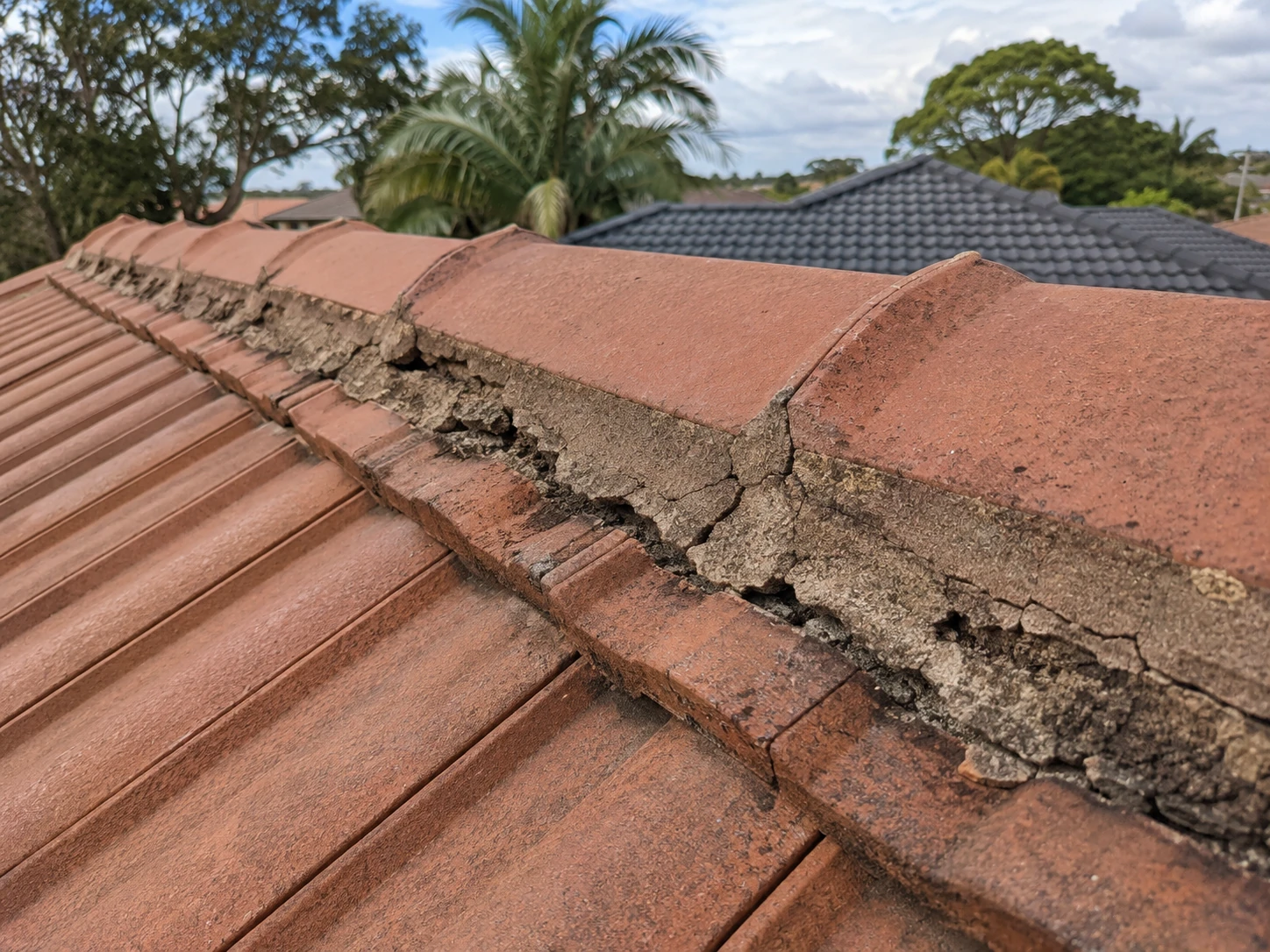
Damaged roof pointing is one of the clearest signs that repointing may be due. When the material around ridge caps and hip tiles starts to crack, crumble or fall away, water can find its way beneath the capping and into the roof structure.
A visual check from the ground or another safe vantage point can often reveal early warning signs. Paying attention to the condition of the pointing around ridge caps, hips and gables can help identify problems before they develop into leaks, loose tiles or internal water damage.
Cracked pointing may appear as fine hairline splits or larger fractures along the joints where ridge caps meet the surrounding roof tiles. Some cracks form straight lines along the joint, while others create a more uneven or spiderweb-like pattern.
Even small cracks should not be ignored. Once water enters these gaps, repeated wetting, drying and temperature movement can gradually make the damage worse.
Crumbling pointing is a more advanced sign of deterioration. The surface may look rough, flaky, powdery or recessed compared with surrounding areas. Small pieces of mortar or pointing material may also be found in gutters, on patios or on the ground below the roofline.
Missing pointing is a clear sign that the roof needs attention. Gaps where pointing used to be can leave ridge caps exposed to water entry and wind uplift. From the ground, this may appear as dark shadow lines between the ridge caps and the roof tiles.
In some cases, the pointing may still be present but no longer properly bonded. It may have pulled away from the tile edge, leaving a narrow gap that runs along part of the ridge or hip. During a professional inspection, a roofer may also check for hollow sounds, loose bedding or movement around the ridge caps.
Isolated hairline cracks in otherwise solid pointing may sometimes be monitored, especially if there are no signs of water entry or tile movement. However, wider cracks, crumbling sections or missing pointing should be treated as signs that repointing is likely needed.
If several ridges or hips show similar damage, the roof may have reached the point where full repointing is more reliable than isolated patch repairs.
Warning signs that deterioration is already affecting the roof include:
Once these signs appear, the pointing is no longer providing adequate protection and timely repairs can help prevent more serious damage.
Ridge tiles are the angled tiles that cap the peak of the roof. They are held in place by bedding mortar and pointing. When the pointing or bedding begins to fail, one of the first visible warning signs is movement along the ridge line.
Spotting loose or shifting ridge tiles early can help prevent more serious damage, especially before periods of strong wind or heavy rain.
Ridge tiles should form a straight, even line along the top of the roof. If sections appear to dip, twist, lift or sit higher on one side, this may indicate loose bedding or failed pointing underneath.
The mortar around the joints may also look cracked, recessed or crumbly. On older roofs, sections of mortar may be missing altogether, leaving open joints that are easier to see in bright light.
If daylight can be seen through joints from inside the roof space, this is a strong indication that the ridge capping needs professional attention.
Any ridge tile that can move may become a safety risk in strong winds. Loose ridge capping can allow surrounding tiles to shift, increasing the chance of leaks, cracking or dislodged tiles.
A homeowner should not climb onto the roof to test ridge tiles. From the ground, warning signs may include:
These signs suggest the ridge system is breaking down rather than simply ageing. In this condition, repointing and sometimes partial rebedding may be needed to resecure the tiles.
Heavy rain is one of the clearest tests of a roof’s condition. If ridge capping or pointing has failed, water often finds the weakest areas first. Watching for new leaks, stains or damp patches after rain can help identify early signs that repointing may be needed.
Instead of checking the roof randomly, it is often more useful to inspect indoor areas and visible roof edges after the rain has eased. Fresh water marks that were not there before, or stains that worsen after each storm, may indicate that moisture is tracking in around cracked or loose ridge capping.
Inside the home, warning signs often appear near the ceiling line. After heavy rain, look for:
These marks may start small and dry out between storms. The most important clue is repetition. If the same patch appears after each downpour, there is likely an ongoing leak rather than a one-off issue such as condensation or a plumbing spill.
Rooms directly below the main roof ridge, hips, valleys or gable ends should be checked carefully, as leaks around these areas can show up as stains inside the home.
If safe roof space access is available, the roof cavity can provide useful clues. After heavy rain, a torch inspection may reveal:
Where pointing has cracked or pulled away, wind-driven rain can enter under the ridge capping and run into the roof cavity. Small leaks may not immediately drip through the ceiling, but they can still soak insulation and timber over time.
Outside the home, heavy rain can reveal problems that dry weather hides. After the rain has passed, check for:
If pointing around the ridge or hips has deteriorated, water may track under tiles and emerge near the eaves instead of flowing directly into the guttering. Localised staining near the top of an external wall can be a sign that water is entering higher up the roof.
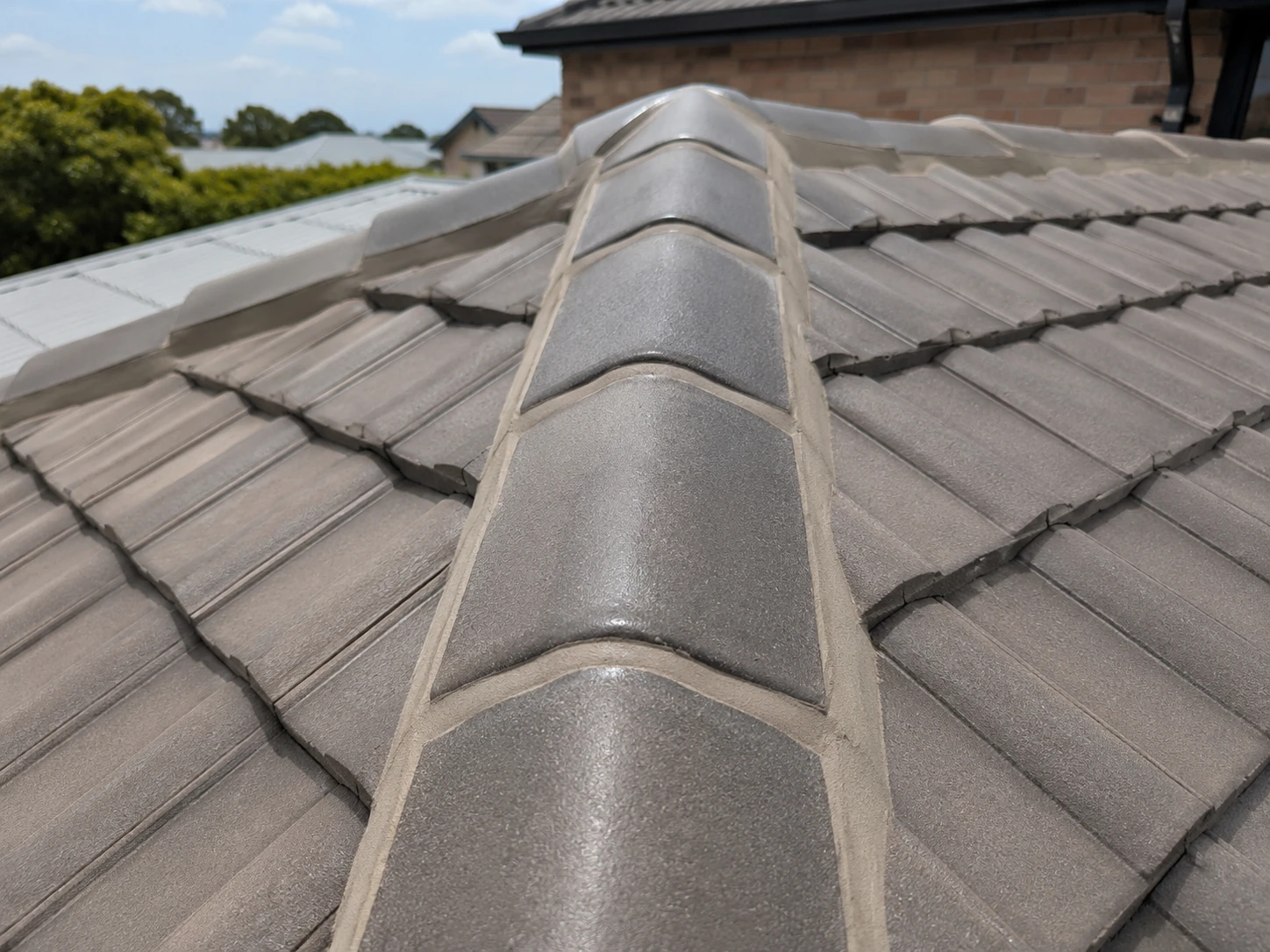
Repointing and rebedding are two different levels of tiled roof maintenance. Knowing which one is needed helps avoid unnecessary cost and ensures the underlying problem is properly addressed.
In simple terms, repointing repairs the outer flexible layer that seals the ridge caps, while rebedding replaces the mortar foundation that supports the caps.
Repointing is typically suitable when the bedding mortar is still structurally sound, but the outer pointing has started to fail. Modern flexible pointing compounds can restore the seal and help secure the ridge capping when the underlying bed remains stable.
Signs that repointing may be enough include:
In these cases, a roofer may be able to remove failing pointing and apply new flexible pointing over the existing stable bedding.
Rebedding is more extensive and becomes necessary when the mortar that supports the ridge caps has deteriorated. If the bedding has failed, repointing alone is unlikely to provide a lasting repair.
Signs that may indicate rebedding is needed include:
In these situations, the ridge tiles usually need to be removed, the old mortar bed replaced and fresh pointing applied over the new bedding. Ignoring failed bedding can increase the risk of tiles dislodging during storms and water entering the roof structure.
From ground level, it is not always easy to tell whether repointing will be enough. A proper inspection involves checking the ridge caps for movement, assessing the depth and condition of the mortar bed and looking for signs of leakage inside the roof space.
Repointing is generally recommended when movement is minimal and the bedding is intact. If multiple caps are loose, the bedding mortar is soft or hollow, or there is a history of recurring leaks, rebedding followed by repointing is usually the more reliable long-term solution.
It is possible to repoint only the visibly damaged sections of a roof rather than the entire ridge line. Whether this is sensible depends on the condition of the existing bedding and pointing, how widespread the deterioration is and how visible the repair area will be.
A careful inspection is important before choosing between spot repairs and broader repointing.
Localised repointing may be suitable when the roof is generally sound and the damage is limited to a few small areas.
A roofer can remove loose pointing from the affected sections, clean the surface and apply new flexible pointing that ties into the existing work. The original bedding mortar beneath the ridge or hip tiles must still be solid and well bonded. If the tiles are secure and there is little movement, spot repointing can restore weather protection without more extensive work.
If damage appears along most of the ridge line or across several hips, repairing only the worst-looking sections may provide only short-term relief. Cracking pointing often indicates age, weather exposure or movement. Where one section has failed, nearby sections may also be close to failing.
In these cases, broader repointing may be more practical. Although it involves more work upfront, it can reduce repeated call-backs, improve wind resistance and provide a more consistent finish across the roof.
Targeted repairs also need to consider appearance and material compatibility. New flexible pointing may differ in colour or texture from older material. In a small or less visible area, this may not be a major concern. On a front-facing ridge line, however, patch repairs can create a noticeable finish.
Adhesion is also important. New pointing needs a clean, sound surface to bond correctly. If the surrounding material is dusty, powdery or heavily cracked, partial repairs may not hold well. In that case, more extensive removal and repointing may be needed.
Roof pointing helps maintain the strength, weather resistance and lifespan of a tiled roof. Cracked or missing pointing, loose ridge tiles, recurring leaks and visible movement along the ridge line are all signs that maintenance should not be delayed.
Addressing these issues early can help prevent water damage, protect the roof structure and reduce the need for more extensive repairs later. Regular inspections and timely repointing allow small problems to be corrected before they develop into larger roofing concerns.
No job and no roof is too big for our team of roofing contractors. We have the experience, skills and equipment to make your roof look and function the way you’d like it to.
Whether you want to paint your roof or remove asbestos, we can help!

