A roof that only leaks during heavy rain can be difficult to diagnose when everything appears dry during lighter showers. For those considering roof repair in Newcastle, this pattern often points to weaknesses that only become exposed when intense rainfall and strong winds put extra pressure on the roofing system.
Cracked tiles, damaged flashing, blocked gutters and deteriorated sealants can all allow water to enter during severe weather. Finding these issues early can help prevent leaks from causing wider damage to ceilings, insulation, timber and other parts of the home.
Town and Country Roof Restoration can assess the roof and identify potential entry points before a minor defect develops into a more serious problem. Recognising the causes and warning signs of heavy-rain leaks can help property owners arrange timely repairs and prepare the roof for future storms.
Roof leaks during heavy rain are often caused by small weaknesses that become vulnerable when the roof has to handle larger volumes of water and stronger winds. Here are common causes:
Addressing these defects early can help restore the roof's ability to manage heavy rainfall and reduce the risk of further water damage.
A roof may remain dry during light showers but leak during a storm because severe weather exposes weaknesses that are not obvious under normal conditions. Heavy rainfall increases the volume of water moving across the roof, while strong winds can drive water into gaps, joints and damaged areas.
Several conditions can make a leak more likely during severe weather:
Water can also travel along rafters, battens and other roof components before appearing inside, which can make the visible leak seem separate from its actual entry point.
As a roof ages, exposure to sun, rain, wind and temperature changes can gradually affect its ability to keep water out. Tiles may crack or become porous, metal can corrode and sealants, pointing and protective layers can deteriorate. These weaknesses may remain unnoticed until heavy rain exposes them.
Previous repairs can also affect the overall condition of an older roof. Patched sections, replacement materials or temporary repairs may deteriorate over time, when different areas of the roof have aged at different rates. If leaks continue to occur in multiple locations during storms, a broader roof assessment may be needed rather than another isolated repair.
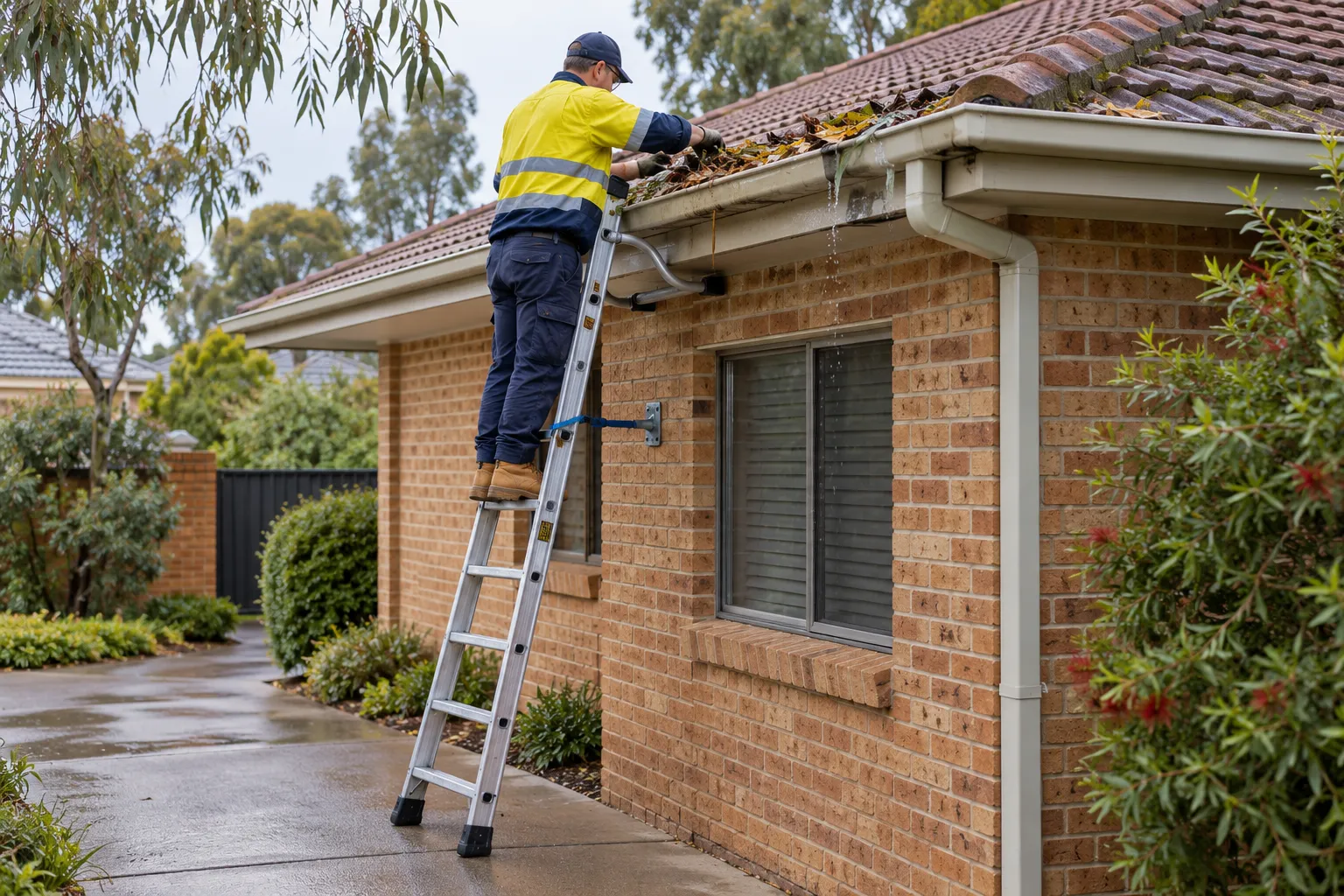
Yes. Blocked gutters and downpipes can contribute to roof leaks, particularly during heavy rain when large volumes of water need to drain from the roof quickly. Leaves, dirt, moss and other debris can restrict water flow, causing gutters to overflow or water to back up against the roof edge, fascia and eaves.
The problem may only become noticeable during a downpour because lighter rainfall can still pass through a partially blocked drainage system. When water cannot drain away efficiently, it may reach gaps around roofing materials or existing weaknesses and enter the roof space.
Keeping gutters, downpipes and other drainage points clear can reduce the risk of storm-related leaks. If a roof continues to leak after drainage issues have been addressed, damaged roofing materials, flashing or another part of the roof may require inspection.
Roof flashing and valleys can allow water into the roof when they become damaged, poorly sealed or blocked. Flashing directs water away from vulnerable areas, while valleys carry runoff from adjoining roof sections towards the gutters. During heavy rain, defects in either area can allow water to reach gaps and enter the roof space.
Signs of problems with flashing or valleys include:
Because water can travel along roofing materials and framing before appearing inside, the visible leak may not be directly below the damaged flashing or valley. Recurring leaks during heavy rain may therefore require a roof inspection to identify the actual entry point.
Finding the source of a roof leak can be difficult because water may travel along rafters, insulation or roofing layers before appearing as a ceiling stain. A methodical inspection can help narrow down where the water is entering.
Roof-level inspections should follow appropriate roof safety guidance, including suitable fall-prevention measures and safe access equipment.
The visible ceiling stain may be some distance from the actual entry point, so recurring leaks are best assessed by tracing the water path rather than repairing only the area where the water appears.
Heavy rain can worsen a roof defect by allowing more water into the roof space. Even when a leak only occurs during storms, repeated moisture exposure can affect ceilings, insulation, timber and other roofing components. The visible signs may also appear some distance from where the water originally entered.
Water can cause ceiling stains, peeling paint, bubbling finishes and softened or sagging plasterboard. Inside the roof space, wet insulation may become less effective, while repeated moisture exposure can contribute to timber deterioration, mould growth and corrosion of metal fixings.
NSW Health advises that repairing roof leaks and controlling indoor moisture can help reduce mould growth in ceilings, insulation and other building materials.
Each storm can allow additional water to enter through the same weak point, potentially increasing the affected area as time passes. What begins as a small leak may eventually require repairs to roofing materials and internal surfaces. Identifying and repairing the source early can help limit further water damage.
Yes. A small roof leak can become a bigger problem if the underlying cause is not repaired. Repeated exposure to heavy rain can allow moisture to reach insulation, timber, roofing materials and internal surfaces, increasing the area affected.
Small defects can also worsen with continued exposure to rain and wind. Water may travel through the roof structure before appearing as a ceiling stain, making the problem harder to locate and allowing hidden damage to develop.
Understanding the common causes of recurring roof leaks can help explain why patching only the visible problem may not provide a lasting solution.
Prompt roof repair can help identify the source of a recurring leak and prevent a minor defect from becoming a more extensive repair. Addressing the problem early can also reduce the risk of further water damage during future storms.
A roof leak may require professional repair when the source is difficult to identify, the problem keeps returning or there are signs of damage inside the property. Recurring leaks can indicate a wider roofing problem that is not obvious from ground level.
A leak that returns during heavy rain or becomes more frequent should be professionally assessed. Repeated leaks may be caused by damaged flashing, cracked tiles, deteriorated sealants or other defects that require more than a temporary patch.
Professional attention is important when a leak is accompanied by:
These signs may indicate that water has been entering the roof space for some time.
Older roofs and leaks around chimneys, skylights, valleys or roof junctions can be more difficult to repair correctly. Multiple previous repairs may also indicate that the roof needs a broader assessment rather than another temporary patch.
A professional inspection can help locate the entry point, assess surrounding damage and determine whether a localised repair or more extensive work is required.
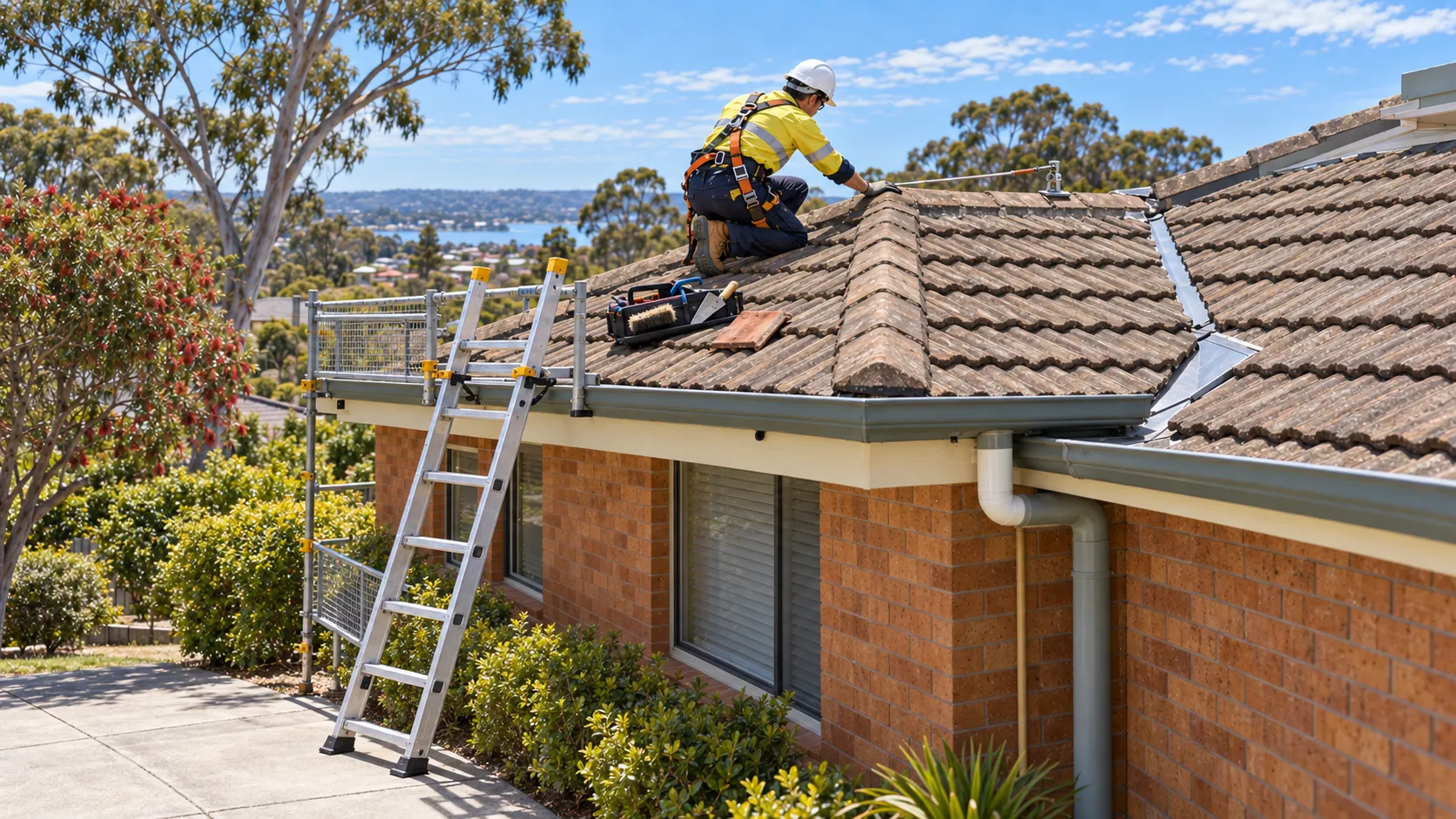
Preventing storm-related roof leaks starts with maintaining the roof and addressing weak points before heavy rain arrives. Regular maintenance and timely repairs can reduce the risk of water entering through damaged or deteriorated areas.
Property owners can also take practical steps to prepare for storm season, including checking drainage and repairing loose roofing components.
Keep gutters, downpipes and roof valleys clear of leaves and debris so rainwater can drain away efficiently. Check for cracked or slipped tiles, corroded metal, damaged flashing, loose fixings and deteriorated sealants and arrange repairs where needed.
Regular roof inspections can identify damage that may not be obvious from ground level. Inspections are particularly useful for older roofs or properties that have experienced previous leaks. Checking the roof after a major storm can also help identify new damage early.
Minor defects can become more vulnerable when exposed to repeated heavy rain and strong winds. Replacing a damaged tile, repairing flashing or clearing a blocked drainage point before storm season can help reduce the risk of a larger leak developing.
A roof that only leaks during heavy rain should not be treated as a minor issue. Small weaknesses in tiles, flashing, sealants, gutters or roof drainage can allow water into the roof space and cause more extensive damage. Identifying the source early can help prevent recurring leaks and reduce the need for more involved repairs.
Regular inspections and maintenance can also help keep the roofing system prepared for severe weather. Town and Country Roof Restoration can assess storm-related leaks, identify vulnerable areas and recommend appropriate repairs to help protect the roof and home from further water damage.
No job and no roof is too big for our team of roofing contractors. We have the experience, skills and equipment to make your roof look and function the way you’d like it to.
Whether you want to paint your roof or remove asbestos, we can help!

