A new roof colour can change the appearance of your home, but glazed terracotta tiles need more consideration than choosing a shade. Their ceramic surface behaves differently from concrete tiles, which means a coating that performs well on one material may not bond reliably to another.
If you are considering painting terracotta roof tiles, the first step is determining whether your tiles and their existing finish are suitable for a new coating. Town and Country Roof Restoration will discuss your roof’s condition and the options to consider. For Newcastle homeowners, understanding the risks of incompatible coatings can help prevent premature peeling, unnecessary maintenance and disappointment with the finished result.
Terracotta describes the fired clay material of a tile, not necessarily its surface finish. Some terracotta tiles are glazed, while others are unglazed or have a different decorative finish. Previous roof painting work can also leave an applied coating over the original surface.
Identifying the tile material and its outermost finish is essential before deciding whether painting is appropriate. Appearance can provide clues, but it cannot confirm coating compatibility on its own.
The familiar reddish or earthy colour of terracotta comes from its clay body and the firing process. That colour does not establish whether a tile is glazed. Terracotta tiles can have coloured ceramic glazes and not every glaze produces a highly glossy appearance.
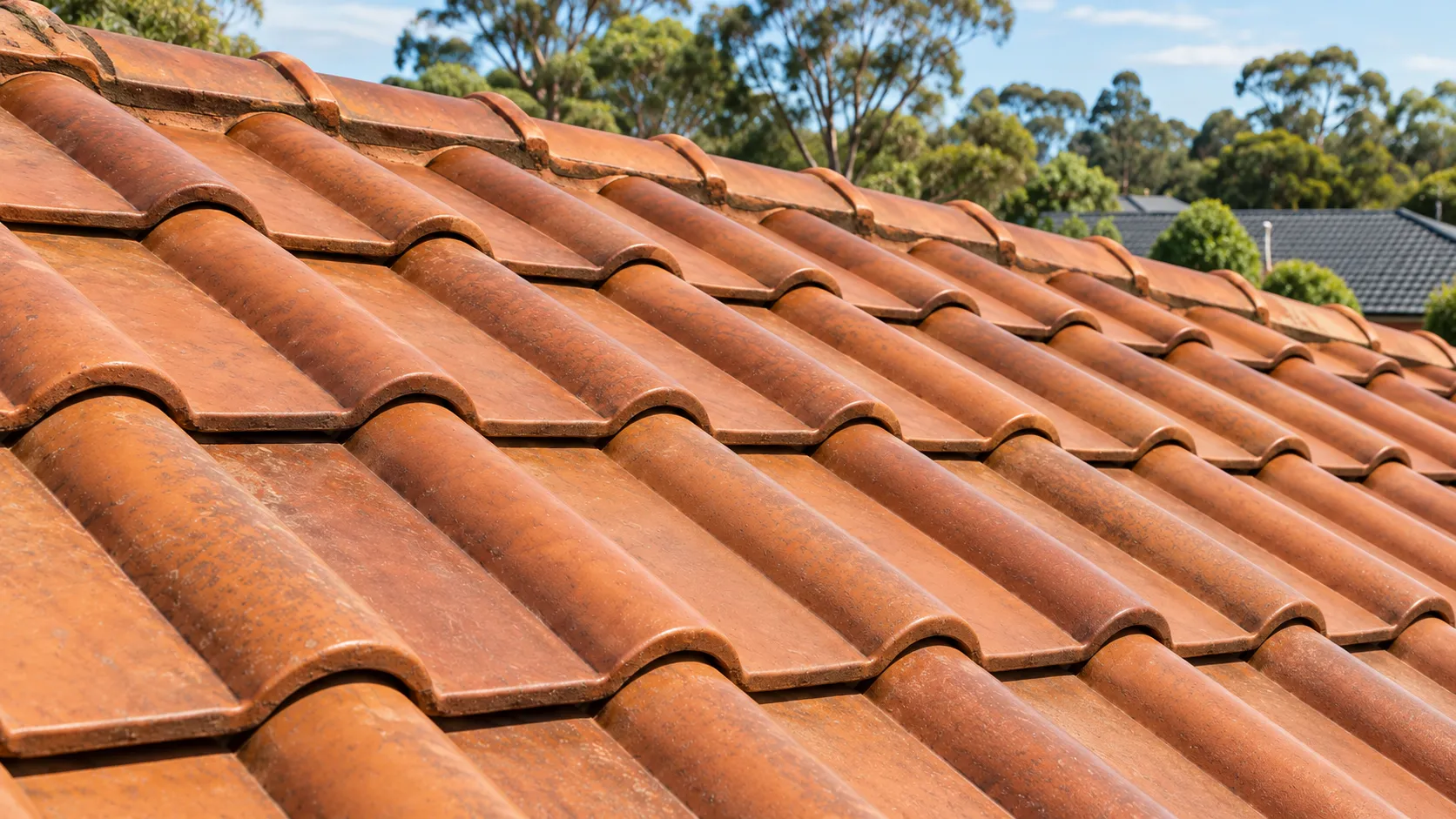
A glaze is a ceramic surface formed during manufacturing. It can create a relatively smooth, low-absorbency surface that behaves differently from the clay beneath it, depending on its composition and finish.
An applied roof coating is different. It is added after the tile has been manufactured rather than formed as part of the original ceramic finish. If your roof has previously been painted, the visible colour may conceal the original surface, so the existing coating and the material underneath need to be assessed.
Concrete tiles are made from cement-based materials rather than fired clay. Although their surface condition and previous treatments also matter, a coating specified for concrete cannot automatically be assumed suitable for glazed terracotta. Each material requires an assessment of the surface the coating will actually contact.
From ground level, you may notice sheen, colour variation or areas where an older coating appears to be flaking. These observations can help a roofing professional understand what needs investigating, but they are not reliable proof of the tile's original finish. Dirt, weathering and previous treatments can all affect its appearance.
Existing records may provide better evidence. Building documents, tile product details and invoices from previous roof work may identify the material, finish or coating already present. If these records are available, provide them during the initial assessment rather than attempting to inspect the roof yourself.
SafeWork NSW’s guidance on working safely at heights explains roof fall hazards and the protective measures needed when working above ground level.
An expert can examine the tiles safely and compare the findings with available product information. If the finish remains uncertain, that uncertainty should be acknowledged before a coating is recommended.
When comparing providers offering roof painting in Newcastle, ask how they will identify your tile finish and determine whether a proposed coating is appropriate. A useful assessment should explain what the surface appears to be, what evidence supports that identification and whether further information is required.
An unsuitable coating may initially provide the colour you want without forming a dependable bond with the roof. Problems can emerge later as the surface experiences sunlight, moisture and changing temperatures.
Glazed terracotta is not automatically impossible to paint. However, compatibility needs to be established for the actual tile finish and proposed coating system rather than assumed because a product has performed well on other roofs.
A coating needs to adhere to the outermost surface it touches. On a glazed tile, that surface is the ceramic glaze rather than the clay body beneath it. Its smooth, low-absorbency characteristics can make adhesion more demanding than on some porous cement-based surfaces.
Applying a primer does not automatically resolve this issue. The primer must be suitable for the identified substrate and compatible with the coating applied over it. General descriptions such as “roof paint” or “suitable for tiles” are not enough to establish that a product will work on a particular glazed terracotta finish.
Existing coatings also require attention. If an older layer is poorly bonded, applying new paint over it will not make the underlying layer secure. The condition of the existing finish, required preparation and compatibility of the complete coating system all influence the likely result.
Where adhesion is inadequate, the finish may peel or flake. Other areas may remain intact, leaving an uneven appearance with patches of exposed tile and paint. Different rates of weathering can make the roof look inconsistent rather than refreshed.
Newcastle's exposure to sunlight, rain and coastal conditions makes appropriate product selection important. The discussion of how coastal weather affects roof painting provides useful context, although weather resistance and substrate compatibility are separate considerations. A coating designed to withstand outdoor conditions must still be suitable for the surface beneath it.
Once an applied coating covers the original ceramic finish, future maintenance may involve managing the coating rather than simply retaining the tile's manufactured surface. If the coating fails unevenly, applying another layer may not be a straightforward solution.
Restoring the original appearance can also be difficult. Removing an incompatible coating may damage the finish beneath it, depending on the removal method and tile condition. Specialist removal or restoration should not be assumed to be a routine or risk-free part of a roof painting project.
Before accepting a proposal, ask what would happen if the existing surface does not meet the coating requirements. The contractor should explain the available options, any limitations and the maintenance the proposed system is expected to require.
A written recommendation supported by product specifications gives you a stronger basis for comparing written quotes than a general assurance that any tile can be painted. If compatibility cannot be established, address that uncertainty before work begins.
Wanting a different roof colour is not the same as needing roof repairs. The decision should separate appearance, surface condition and the roof's ability to keep water out.
For a glazed terracotta roof, retaining a sound original finish may be preferable when a suitable coating system cannot be established. A professional assessment can help determine whether cleaning, repairs or another approach is more appropriate for the roof's condition.
A ceramic finish does not necessarily need an additional coating simply because you would prefer a different colour. If the original surface remains sound, painting introduces another material and an additional maintenance consideration. That trade-off deserves attention when compatibility is uncertain.
A roof that looks tired from the street may have dirt or surface growth affecting its appearance. Professional cleaning may improve its presentation without changing the original finish, provided the method suits the tile material and condition. Aggressive cleaning or unsuitable treatments can create additional problems, so the approach should be based on an assessment rather than a standard procedure for every roof.
Cleaning will not resolve every concern. Broken tiles, defects around roof junctions and other potential sources of water entry need separate investigation and appropriate repairs. Painting should not be treated as a substitute for correcting these issues.
The distinction between roof painting and repairs is useful when comparing quotes. A proposal should identify which work addresses an existing defect and which work is intended to improve appearance. This makes it easier to compare suppliers offering different scopes of work.
Retaining the original finish does not mean ignoring the roof. Cleaning, targeted repairs and routine inspections may still be appropriate, but a complete colour change should not be assumed necessary simply because the surface looks weathered.
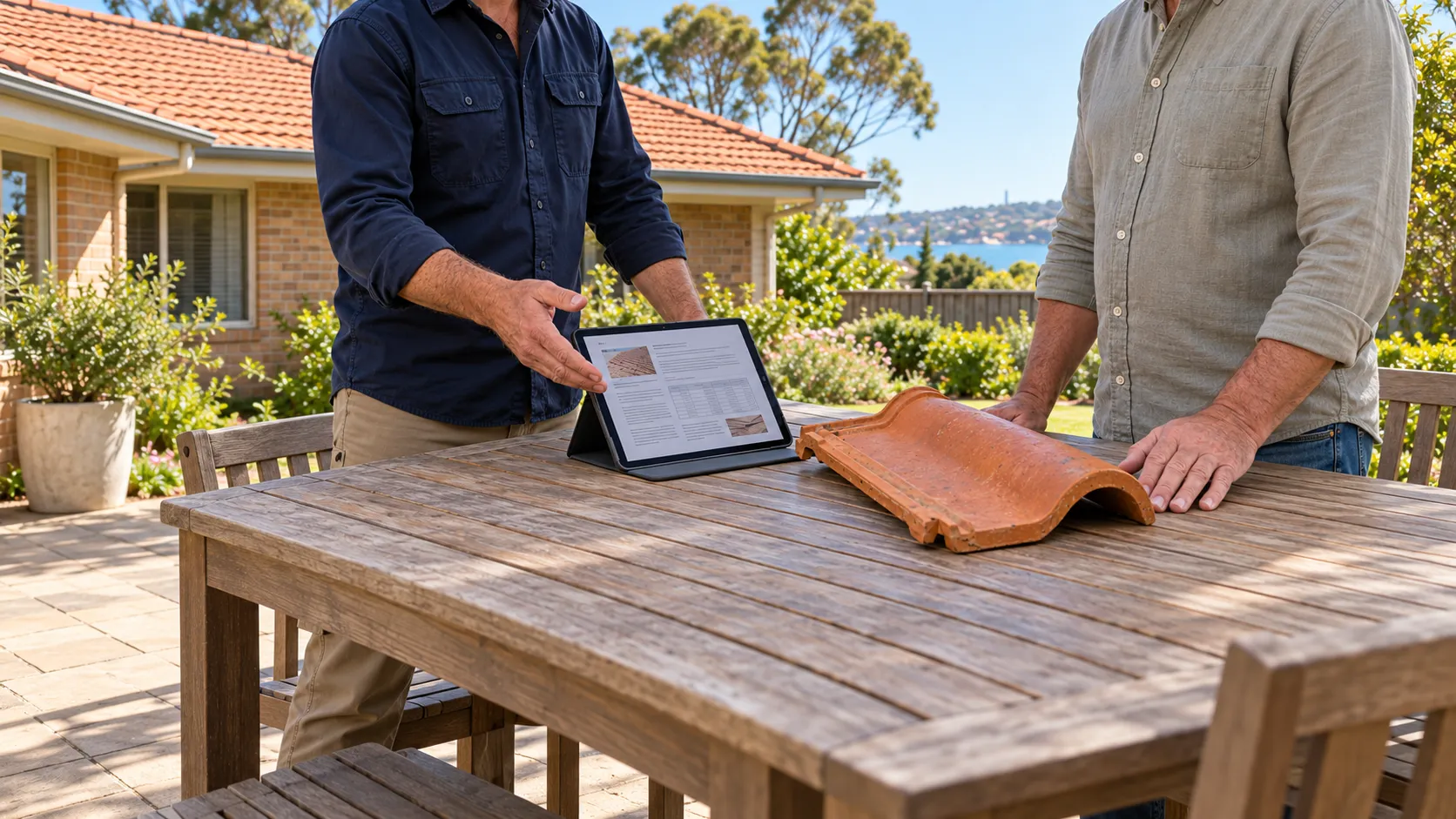
Start by explaining the outcome you want to achieve. Is the main concern the roof's colour, or have you noticed flaking, damaged tiles or signs of water entry? Different concerns can require different recommendations, even on the same roof.
When discussing your options, ask how the tile material and existing finish will be identified before any coating is recommended. The proposed work should be based on your roof’s condition, with any limitations explained clearly.
If painting is being considered, request the following information:
If the contractor recommends retaining the original finish, ask which condition-related work is still necessary and why. Any proposed cleaning or repairs should also be explained in the written scope.
Keeping repair needs separate from colour preferences makes it easier to compare local suppliers on the work your roof actually requires. It also helps prevent a cosmetic improvement from being mistaken for a solution to an underlying roofing defect.
For homeowners considering a roof refresh, Town and Country Roof Restoration can be approached to discuss the roof's condition and the options appropriate for its existing finish. The priority should be choosing an approach supported by the tile's condition and the relevant product specifications, rather than committing to a coating before its suitability has been established.
No job and no roof is too big for our team of roofing contractors. We have the experience, skills and equipment to make your roof look and function the way you’d like it to.
Whether you want to paint your roof or remove asbestos, we can help!

