A screw that appears to be lifting on a metal roof can look like a small problem with an obvious fix. However, tightening it may do little if the washer has deteriorated, the fixing hole has become enlarged or the screw no longer grips the supporting material.
As homeowners compare roofing professionals in Newcastle, understanding these differences helps when discussing repair options. Town and Country Roof Restoration can be contacted to assess suspected fastener issues and determine whether the problem involves a single fixing or a wider roofing concern.
Exposed screw heads are normal on many metal roofs. The concern is whether a screw appears unusually high compared with others in equivalent positions, or whether its washer, surrounding sheet or fastening point shows signs of movement or damage.
These observations can indicate a problem, but they do not confirm the cause. A roofing professional needs to distinguish between a fastening issue, a failed seal and damage affecting the sheet or its support.
A screw head naturally sits above the roof sheet, with a sealing washer beneath it. Its position depends on the roof profile and fastening arrangement, so comparing screws in different parts of the profile can be misleading.
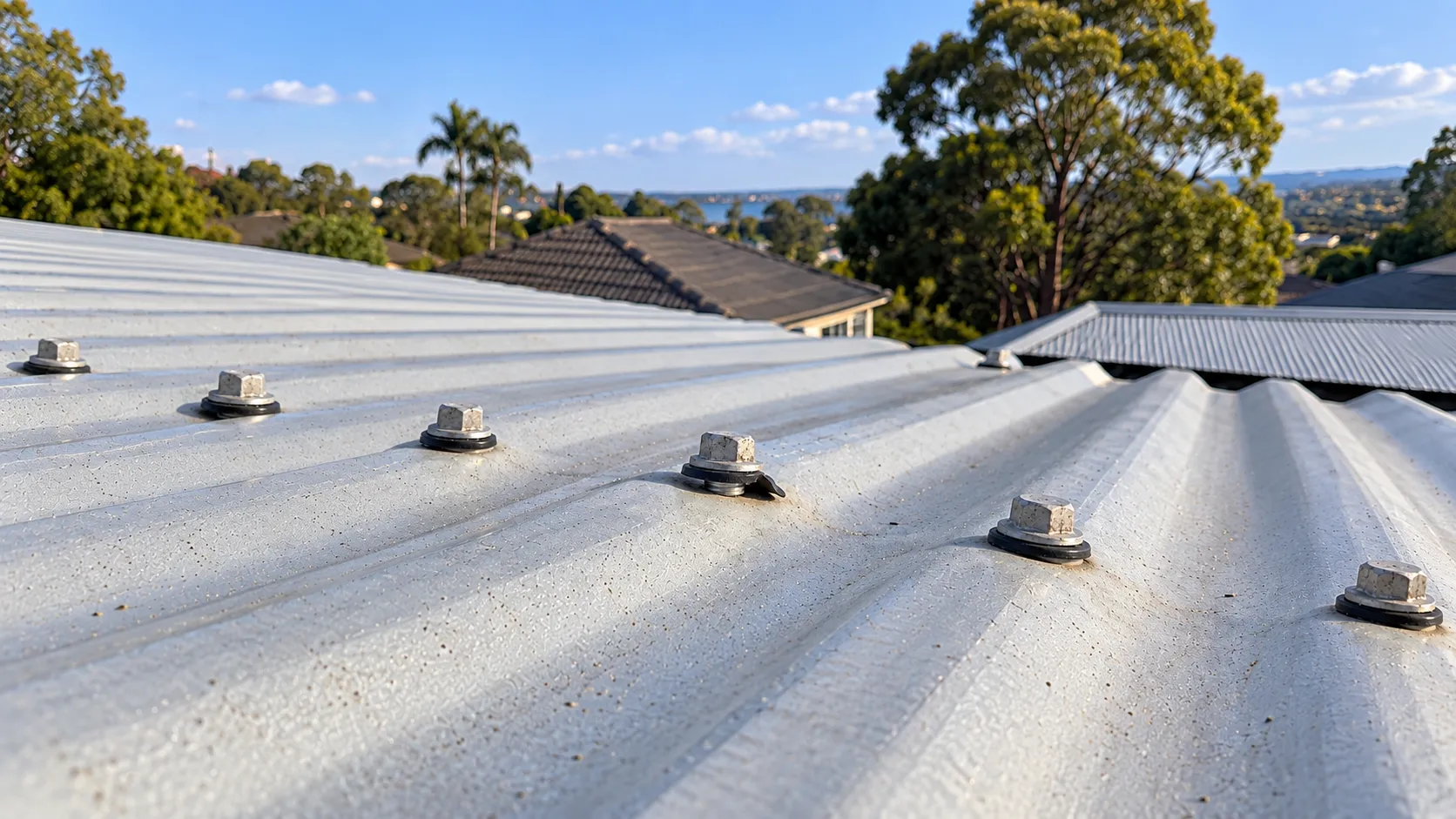
More useful signs include a fixing that sits higher than neighbouring screws in similar positions, a displaced or cracked washer, or movement around the sheet. Previous installation issues or damage to the roof material can produce similar symptoms.
Water staining inside the home is also worth reporting, although it does not prove that the nearest visible screw is responsible. Water can travel along roof components before becoming visible indoors. Conversely, the absence of a leak does not guarantee that the fixing is secure.
Homeowners should observe the roof from a safe position on the ground rather than climbing onto it or using a ladder for a closer inspection. Photographs taken safely from the ground can help explain the concern, while a professional can assess the fastening and surrounding materials.
A professional roof assessment can help identify deterioration in the roofing and supporting structure while allowing inspection risks to be managed appropriately.
One unusual fixing may involve a damaged washer or a problem confined to a single fastening point. Several affected screws along a line or across a roof section may warrant investigation of the installation details, sheet movement or supporting material.
The pattern helps the roofer determine where to investigate, but it does not establish the cause. Ask whether neighbouring fixings and the surrounding sheet will be checked rather than accepting an assessment based solely on the most obvious screw.
Timing can also provide useful context. If the change appeared after strong winds, mention this when arranging an inspection without assuming the weather caused the problem. Advice on what to do after storm damage can help homeowners recognise when prompt attention may be appropriate.
A roof fixing performs two related functions. The screw secures the sheet to its support, while the sealing washer helps prevent water from entering around the penetration. These components can deteriorate independently, meaning a damaged seal does not necessarily indicate that the screw has lost its grip.
Identifying which part has failed is important because the appropriate repair depends on the condition of the complete fastening connection.
Metal roof sheets expand and contract as temperatures change. A correctly specified and installed fastening system accommodates the movement expected for that roof. Repeated movement can place stress on fixing locations, specifically where installation details or existing damage interfere with the sheet's normal movement.
Wind can also place loads on roof sheets and their fasteners. James Cook University’s research into wind effects on roof cladding examines how roofing systems respond to repeated wind loading. Whether these forces contributed to a raised screw depends on the roof’s condition and fastening arrangement, so the cause should not be assumed from appearance alone.
Sealing washers also deteriorate with age. Exposure to sunlight, heat and weather can cause their material to harden, crack or lose resilience. A washer that was unevenly seated or excessively compressed during installation may also fail to seal effectively.
An intact-looking washer does not necessarily mean the fixing is secure, as the screw's grip beneath the sheet cannot be judged from its appearance alone. A proper assessment considers both the visible seal and the connection to the supporting material.
Regular roof observations can help homeowners notice changes before they become more obvious. The seasonal roof maintenance checklist provides broader maintenance advice, but a suspected lifting fastener still requires a specific assessment.
The opening through the roof sheet and the screw's connection to the supporting material are separate parts of the fastening system. Movement or previous damage can enlarge or distort the sheet opening, making it difficult to maintain a reliable seal even if the screw still grips the support.
Alternatively, the screw may not have sufficient engagement with the supporting material. Damaged threads, installation issues or deterioration in the support can reduce its holding ability. Depending on the roof construction, the support may be timber or metal and its condition cannot reliably be determined from the roof's visible surface.
These problems can occur together. A fixing that no longer holds the sheet securely may allow additional movement around the penetration, while an enlarged opening can complicate an otherwise straightforward repair.
The roofer should assess the washer, sheet opening, screw and supporting material together before recommending a repair.
Tightening may be appropriate for some fixings, but only after their condition and support have been checked. Asking a roofer to tighten every visible screw without investigating the cause can leave the underlying problem unresolved.
The important question is whether the repair will restore secure fastening and a dependable seal without damaging the surrounding roof.
If a screw has lost its grip in the supporting material, turning it may not create a secure connection. The screw might appear seated temporarily while remaining unable to withstand normal movement or loading, allowing the problem to recur.
Tightening also cannot reverse damage to the opening through the roof sheet. If the hole has become enlarged or distorted, the roofer must determine whether the existing fastening arrangement can still provide an effective seal.
Excessive tightening introduces further risks. It can overcompress or distort the washer and deform the roof sheet. The washer needs to be seated correctly to seal the penetration, rather than subjected to the greatest possible pressure.
Replacing a raised screw without checking the surrounding materials may also result in an incomplete repair. A replacement fastener still depends on suitable support and a sheet opening that can be sealed effectively. Where the original hole is damaged, the appropriate solution must be selected for the specific roof system rather than assuming that a larger screw will resolve the issue.
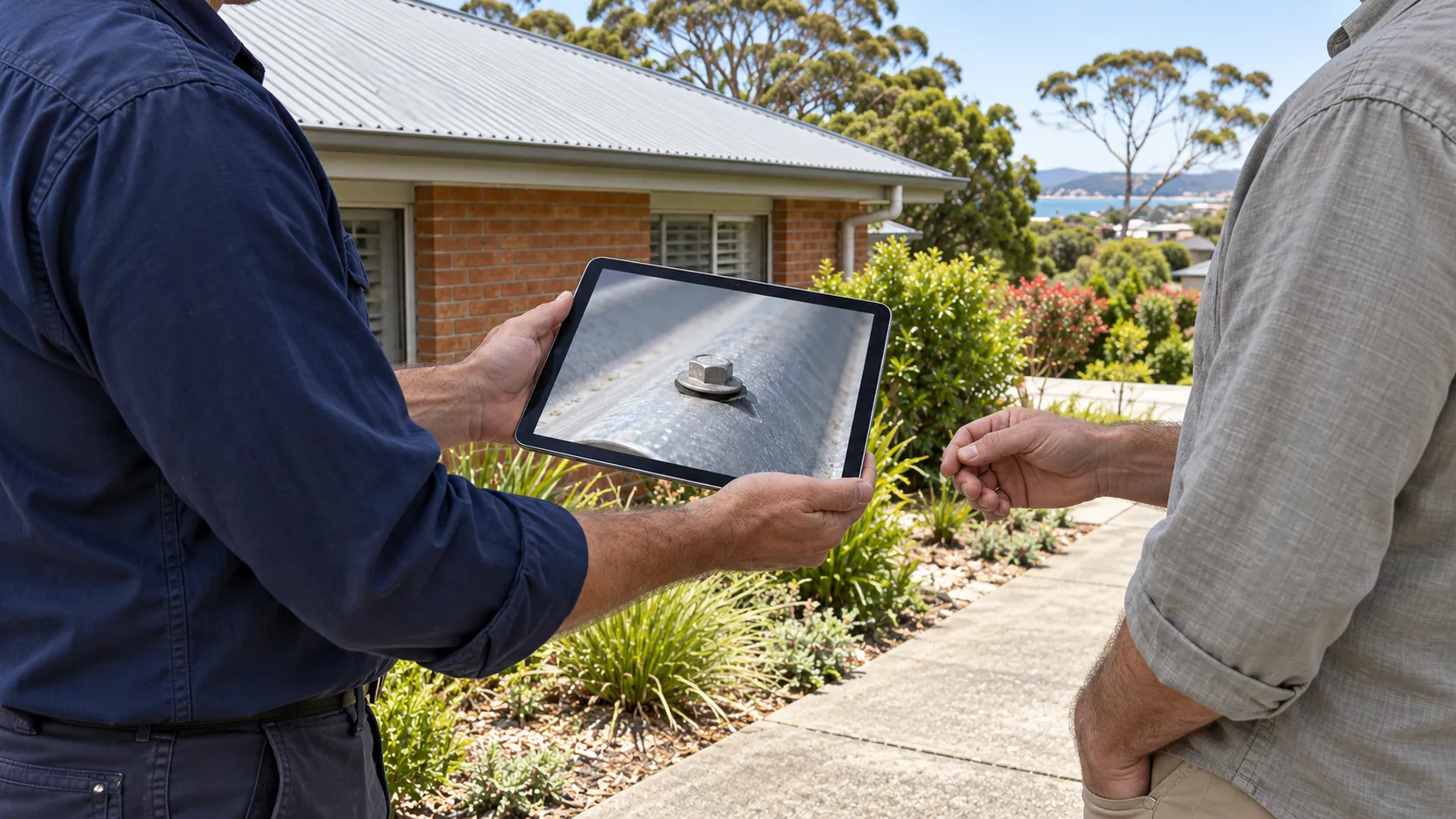
A roofing professional should check whether the fastener is suitable for the roof, whether the washer remains serviceable, whether the sheet opening is damaged and whether the screw has adequate engagement with its support. Nearby fixings should also be assessed where the visible problem suggests a wider issue.
When comparing providers for roof repair in Newcastle, ask what the inspection will cover before a repair method is selected. Localised repairs may be sufficient when the surrounding sheet and supporting material remain sound. More extensive deterioration may require additional work because replacing individual screws will not necessarily address the underlying weakness.
Ask for the proposed scope of work to identify the affected fixings, any necessary repairs to surrounding materials and areas that require further investigation. Inspection photographs can help explain the findings and support the recommendation.
If a quote only includes tightening screws, ask how the roofer has assessed the washers, sheet openings and supporting material. This helps establish whether the proposed work addresses the cause of the problem rather than just its visible symptom.
A raised screw on a metal roof may indicate a minor fastening issue, but the washer, sheet opening and supporting material all influence the appropriate repair. Town and Country Roof Restoration can be contacted to discuss the concern and arrange an appropriate assessment. Addressing the underlying issue helps ensure the repair is suited to the roof's actual condition.
No job and no roof is too big for our team of roofing contractors. We have the experience, skills and equipment to make your roof look and function the way you’d like it to.
Whether you want to paint your roof or remove asbestos, we can help!

