When hail strikes during a severe storm, roof damage is not always easy to spot. Broken tiles and obvious dents are clear warning signs, but small cracks, coating damage and weakened components can remain hidden until they lead to leaks or further deterioration.
Town and Country Roof Restoration understands that identifying hail damage early can help homeowners protect their roofs and avoid more costly repairs. Different roofing materials can respond differently to hail, making it important to know which signs to look for after a storm.
Understanding these warning signs can help homeowners decide when a roof needs monitoring, inspection or repairs. For homeowners considering roof repair in Newcastle, recognising hail damage early can make it easier to address minor issues before they develop into more serious problems.
Hail damage is not always immediately visible because impacts can weaken roofing materials without creating obvious cracks, holes or broken sections. Small impacts may cause hairline cracks in tiles, loosen metal fixings or damage protective coatings while leaving the roof looking relatively normal from the ground.
The effects vary depending on the roofing material. Concrete and terracotta tiles may develop chips, bruising or surface damage, while metal roofing can develop dents, coating damage or stressed seams. Some defects may not cause an immediate leak but can worsen with continued exposure to rain, wind and temperature changes.
Even minor hail impacts can create weaknesses that deteriorate over time. A small crack in a tile may eventually allow water into the roof cavity, while damaged coatings on metal roofing can expose the surface to moisture and corrosion.
Hail-related leaks do not always develop immediately. Water can enter through a damaged section and travel beneath tiles, metal sheets, sarking or insulation before becoming visible as a ceiling stain or damp area. A leak that appears weeks or months after a storm may therefore still be connected to earlier hail damage.
For this reason, a roof that looks intact after a hailstorm should not automatically be considered undamaged. Where hail has occurred or visible impact damage is present, a professional inspection can help identify defects before they become more serious.
A safe roof check should begin from the ground or another secure vantage point rather than by climbing onto the roof. Wet surfaces, cracked tiles and damaged metal sheeting can create serious fall and injury risks.
SafeWork NSW highlights the serious risks associated with working at heights, particularly when roofs, ladders and potentially fragile surfaces are involved.
From the ground, an upper window, or another secure location, look for:
Binoculars can help identify smaller defects on steep or difficult-to-view roof sections without requiring roof access.
If the roof space can be accessed safely, look for fresh ceiling stains, damp insulation, moisture on rafters or daylight visible through gaps. New water damage following a hailstorm may indicate that the roof covering or flashing has been compromised.
The roof cavity should not be entered if there is standing water, exposed electrical wiring or another obvious hazard.
If damage is suspected but cannot be safely confirmed from the ground, a qualified roofing professional should inspect the roof. They can assess difficult areas such as flashings, valleys, ridge capping, gutters and roof penetrations and determine whether repairs are required.
Professional storm damage roof repairs can address broken tiles, damaged flashings, compromised gutters and other defects caused by severe weather.
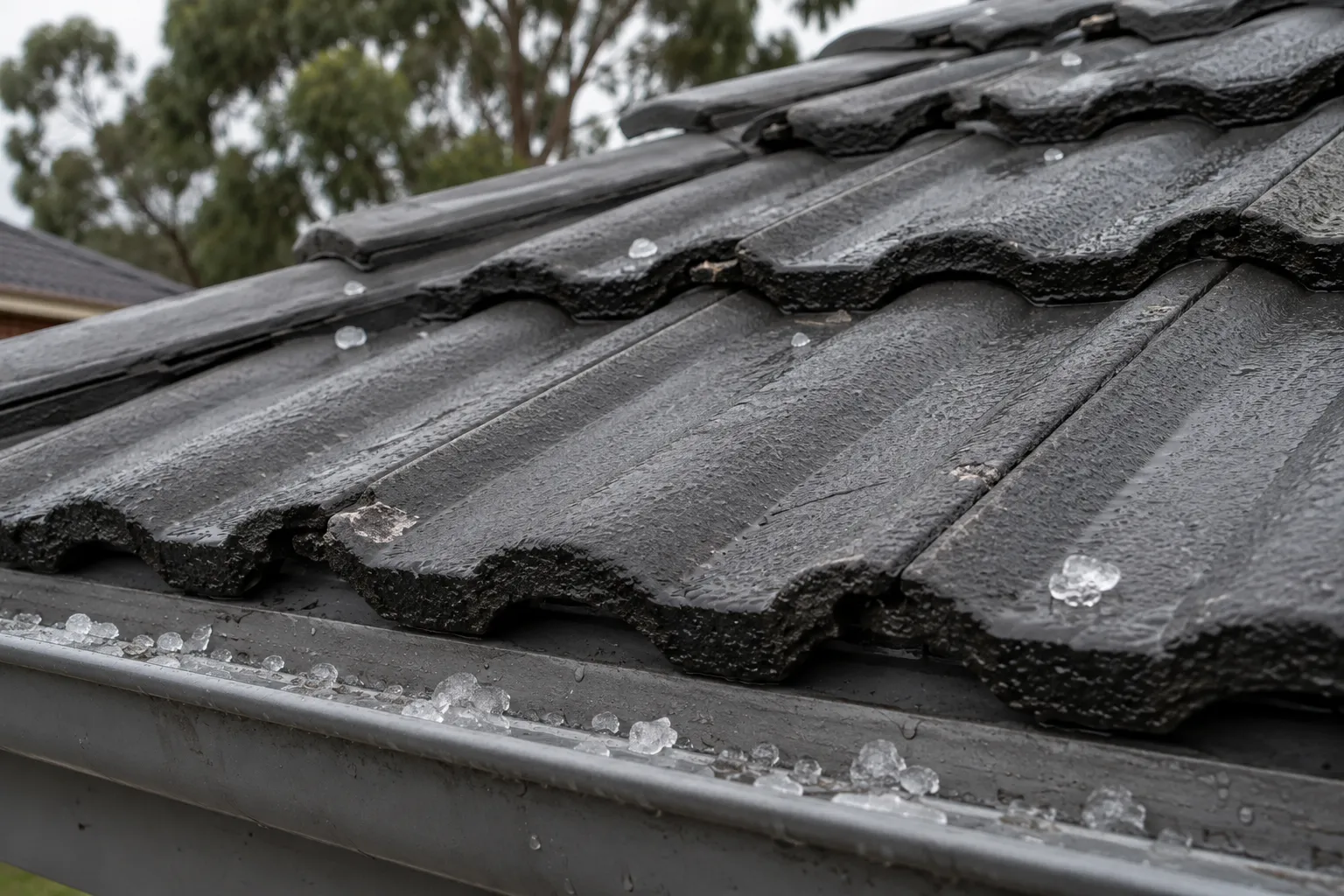
Hail can damage tiled roofs without immediately causing obvious breakage or leaks. Small chips, cracks, surface marks and displaced tiles can weaken the roof and allow water to enter. Because these defects can be difficult to see from the ground, homeowners should focus on visible changes and avoid walking on the roof to investigate them.
Here are some signs:
Older tiles can also develop general weathering, so not every crack or surface mark is necessarily caused by hail. New, localised damage that appeared after a severe storm is more likely to warrant professional assessment.
Metal roofing can withstand weather exposure, but severe hail can still cause dents, coating damage and problems around seams or fasteners. Some defects are difficult to see from the ground, so homeowners should look for changes that appeared after the storm without climbing onto the roof.
Be aware of the signs:
Light denting may be mainly cosmetic, but damage to coatings, seams, fasteners or flashings can become more serious as time passes. A professional inspection can determine whether repairs are necessary.
It can be difficult to tell whether roof damage was caused by hail or normal ageing. Hail typically creates localised, fresh-looking impact marks, while general wear tends to develop gradually across larger areas. Looking at the type, location and timing of the damage can provide useful clues.
Signs that are more consistent with hail include:
Normal roof wear is more likely to involve widespread fading, surface erosion, gradual corrosion or deterioration across older sections. However, ageing can make roofing materials more vulnerable to hail, so both types of damage can occur together.
Hail can damage more than the main roof surface. Gutters, valleys, flashings and ridge capping can also suffer dents, cracks or movement that affect drainage and allow water to enter. Checking these areas can reveal damage that might otherwise be missed.
Gutters and downpipes can provide useful clues about the severity of a hailstorm because they are exposed and often show impact damage clearly. Dents or deformation can also affect drainage and increase the risk of pooling or overflow.
Look for:
If hail has created low points in the gutter, water may pool instead of draining properly, increasing the risk of corrosion and overflow.
Check visible valleys and flashings for dents, creases, punctures, lifted edges or damaged seals. Pay particular attention around skylights, chimneys, vents and wall junctions, where small gaps can allow wind-driven rain into the roof.
Homeowners can also familiarise themselves with the signs a roof valley needs repair, particularly where hail has caused dents, corrosion, lifted edges or drainage problems.
On tiled roofs, look for cracked, chipped or displaced ridge and hip tiles. On metal roofs, check for dents, distorted laps or movement around fixings. Damage to these areas can allow water beneath the roof covering and should be professionally assessed if it cannot be safely inspected from the ground.
Hail damage may not become obvious until water starts entering the home. Indoor changes can indicate that the roof covering, flashing or other components were compromised during the storm.
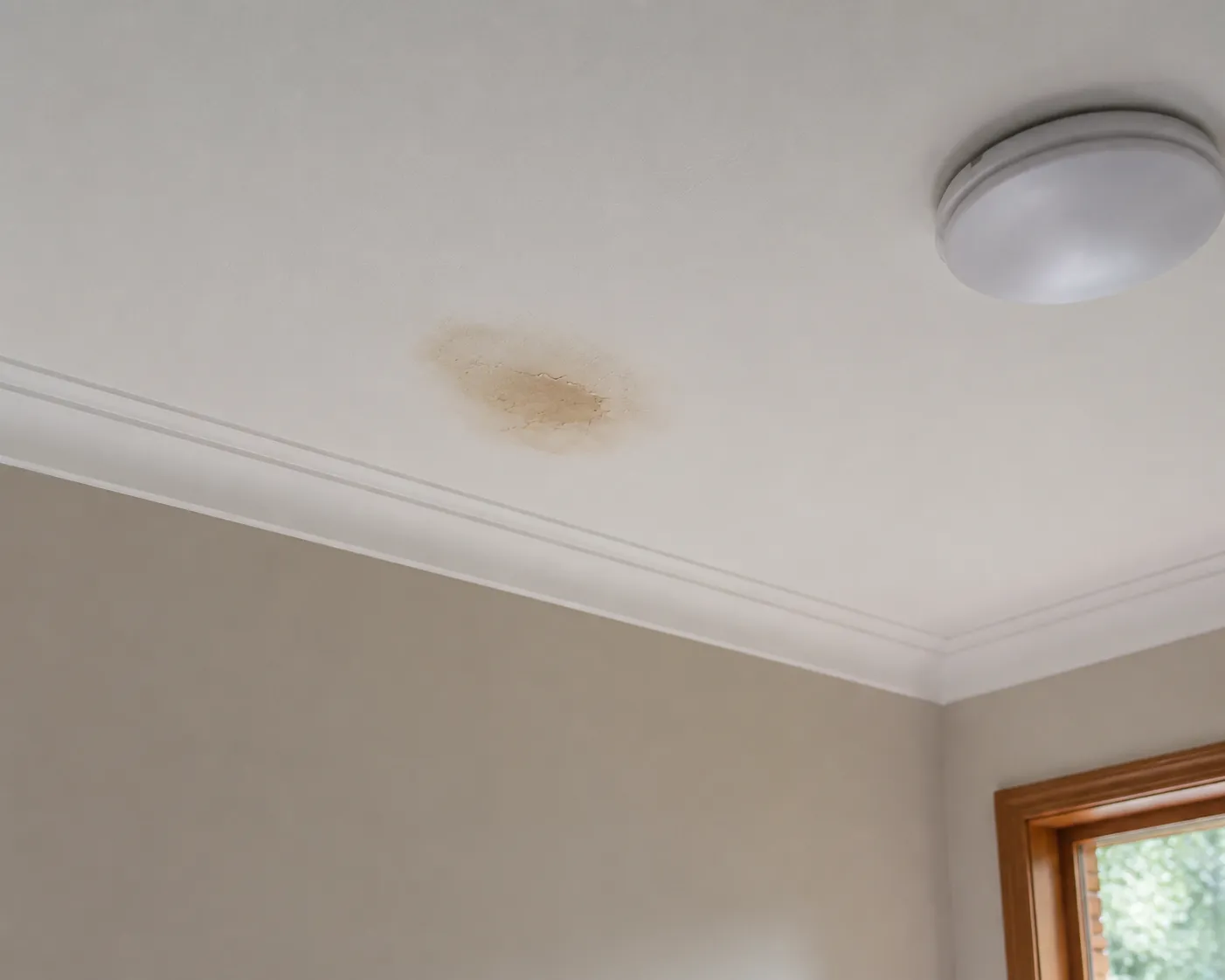
Look for these warning signs:
These signs do not always show where the roof was damaged, as water can travel beneath the roof covering before appearing indoors. New moisture or staining following a hailstorm should therefore be assessed promptly.
Yes, hail damage can cause roof leaks weeks or even months after a storm. A roof may appear watertight immediately after the event, but small cracks in tiles, damaged protective coatings on metal roofing, loose fixings or distorted flashings can worsen with exposure to rain, wind and temperature changes. What begins as minor impact damage can allow moisture into the roof cavity.
Hail-related leaks can also be difficult to trace because water does not always appear directly below the damaged area. Moisture can travel along roof framing, underlay or insulation before reaching the ceiling, meaning a stain or damp patch may appear some distance from the original impact. New discolouration, bubbling paint, damp insulation or musty smells should therefore not be ignored simply because there was no leak immediately after the storm.
Early assessment can help prevent minor hail damage from becoming a more serious roofing problem. Having the roof inspected after significant hail can identify weakened areas and allow necessary repairs to be completed before further weather exposure causes more extensive damage.
If hail damage is suspected, taking action promptly can help prevent minor defects from developing into leaks or more extensive roof damage. Homeowners should avoid climbing onto the roof and instead begin with a safe visual check before arranging a professional inspection.
NSW SES guidance explains how residents can stay safe after a storm, including arranging property inspections, contacting appropriate professionals and seeking emergency assistance when required.
A practical approach is to:
Acting early makes it easier to identify hail damage before further weather exposure causes leaks or deterioration. It also helps ensure that necessary repairs address the underlying problem rather than only the most visible damage.
Homeowners can also review the process for documenting storm damage and insurance claims before contacting their insurer.
Professional roof repairs should be arranged as soon as hail damage is suspected if there are cracked or broken tiles, dented or damaged metal roofing, compromised flashings or signs of water entry. Even when the roof looks relatively intact, some hail damage can be difficult to spot from the ground and may worsen with continued exposure to rain and wind.
An inspection is important after a hailstorm or when nearby surfaces such as gutters, vehicles and outdoor structures show clear impact damage. A qualified roofer can check the roof covering, valleys, flashings, ridge capping, gutters and other vulnerable areas to determine whether the damage is cosmetic or likely to affect the roof's weather resistance.
If there are active leaks, ceiling stains, damp insulation, bubbling paint or visible moisture in the roof space, professional assistance should be sought promptly rather than waiting for the problem to worsen. Homeowners should also photograph visible damage from safe locations and keep records of the storm and when the damage was noticed if an insurance claim may be required.
Identifying hail damage early can help prevent small defects from becoming leaks, corrosion or more extensive roof repairs. While homeowners can check for obvious signs from the ground, damage to tiles, metal roofing, flashings and other components may not always be visible without a professional assessment.
Town and Country Roof Restoration can inspect a roof after a hailstorm, identify areas that require attention and recommend appropriate repairs. Acting promptly after a hail can help preserve the roof's condition, reduce the risk of further weather-related damage and give homeowners greater confidence that their property is properly protected.
No job and no roof is too big for our team of roofing contractors. We have the experience, skills and equipment to make your roof look and function the way you’d like it to.
Whether you want to paint your roof or remove asbestos, we can help!

