For homeowners considering roof painting in Newcastle, a freshly painted roof can do more than improve street appeal. A quality coating helps protect roofing materials from harsh weather, refreshes the home's appearance and can extend the roof's serviceable life when the surface is properly prepared.
Understanding the painting process also helps homeowners know what to expect, from the initial inspection and repairs through to cleaning, priming, coating and curing. Each stage contributes to the durability and overall quality of the finished result.
Town and Country Roof Restoration takes a thorough approach to roof painting, beginning with a detailed roof assessment and addressing necessary repairs before selecting and applying a suitable coating system. This process helps ensure the finished roof is not only attractive but properly prepared and protected.
A thorough roof assessment is the first step in a successful painting project. Painting over hidden damage, moisture, rust or failing coatings can lead to premature peeling, blistering and other coating problems. An inspection allows the roofer to identify necessary repairs, assess the existing surface and determine the most suitable preparation and coating system.
Homeowners can also review the common checks used to determine whether a roof is ready to be painted, including the condition of existing coatings, roofing materials, pointing and moisture-affected areas.
The assessment typically covers:
Once the assessment is complete, the roofer can establish which repairs and preparation are required. This ensures the coating is applied to a clean, sound and suitable surface rather than simply covering existing problems.
Roof painting should only begin once existing damage and defects have been addressed. Paint cannot repair leaks, cracked tiles, corrosion or structural problems and coating over these issues can allow them to worsen beneath the new finish. Completing repairs first ensures the roof is stable, weatherproof and ready for proper surface preparation.
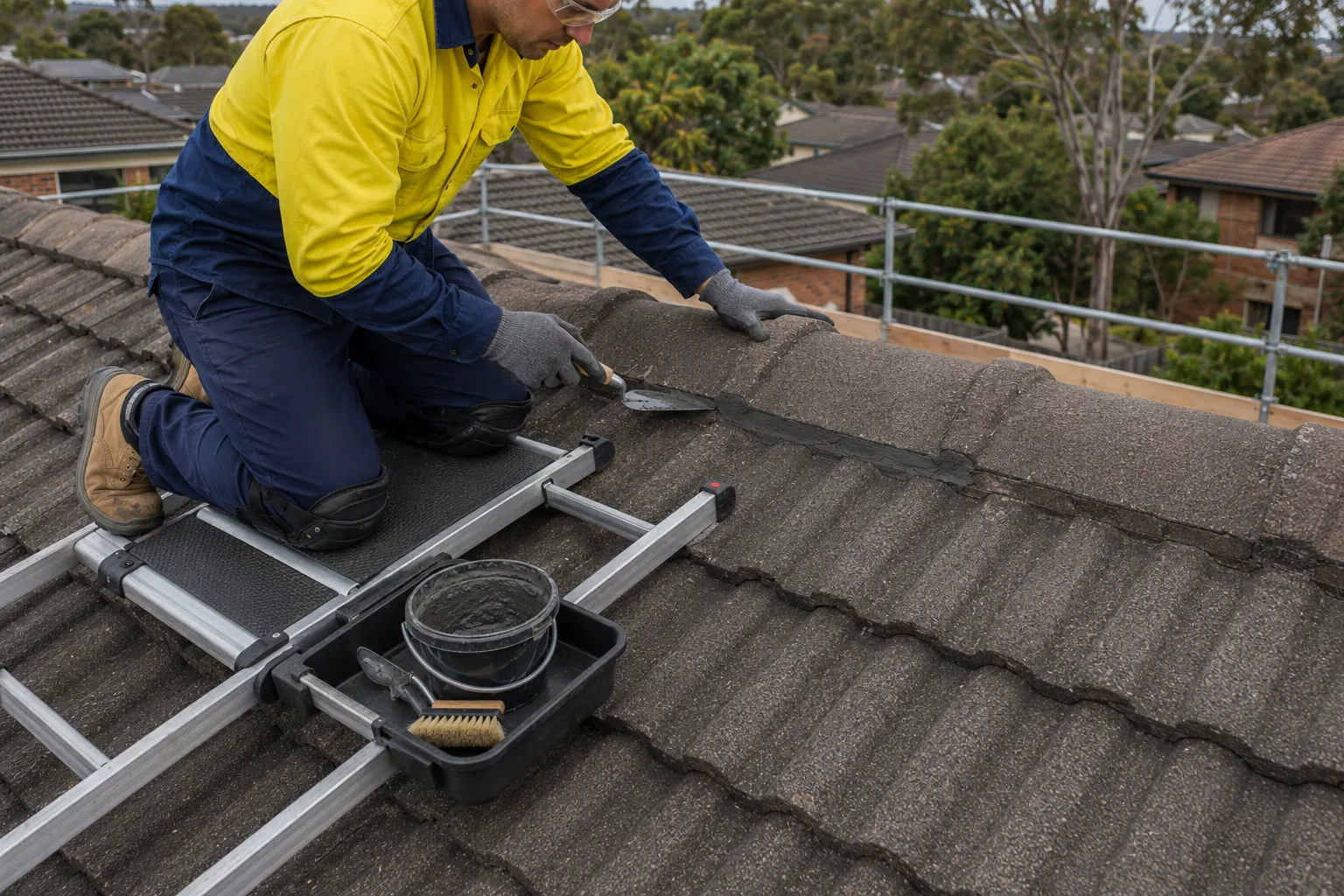
Repairs may include:
On tiled roofs, recognising the signs that a roof needs repointing can help identify loose ridge caps, cracked pointing and deteriorated bedding before the roof is painted.
Once these repairs are complete, the roof provides a sound and stable base for cleaning, priming and coating.
Choosing the right roof coating is important for achieving a durable finish that suits the roof's material, condition and exposure to different weather. A coating designed for concrete tiles may not be suitable for metal roofing, while heavily weathered surfaces may require additional preparation or a specialised system.
Professional roofers can assess the existing surface and recommend a compatible coating based on its performance requirements rather than choosing a product based on colour alone.
The roofing material and existing surface condition influence which coating system is appropriate. Important considerations include:
Using a compatible coating helps improve adhesion and reduces the risk of peeling, blistering and premature deterioration.
Roof coatings are available in different colours and finishes, allowing homeowners to improve the property's appearance while maintaining a practical finish. Lighter colours may reflect more solar radiation, while darker shades can create stronger contrast with the home's exterior.
The selected finish should complement the property without appearing uneven or excessively glossy. Colour and appearance should also be considered alongside the coating's performance characteristics.
Roofs can experience strong UV exposure, heavy rain, humidity and coastal air. The selected coating therefore needs to withstand moisture, sunlight and repeated expansion and contraction.
Depending on the roof's condition, a standard roof paint may be suitable, while a more flexible membrane could provide additional waterproofing and crack-bridging performance. Following the manufacturer's requirements for the specific roofing material helps ensure the coating performs as intended.
Thorough cleaning and surface preparation are essential for creating a sound base for the new roof coating. Dirt, moss, lichen, chalky residue and loose paint can prevent proper adhesion and contribute to peeling, flaking or uneven coverage if they are not removed first.
Before cleaning begins, the roof is checked for loose tiles, rust, damaged coatings and areas requiring extra care. Appropriate safety equipment and access systems are also put in place based on the roof's height, pitch and condition.
SafeWork NSW provides guidance on roof edge protection, including the use of physical barriers and appropriate controls when work must be performed from a roof.
Pressure cleaning removes accumulated contaminants and prepares the roof for coating. Pressure and cleaning methods should be adjusted to suit the roofing material to avoid damaging tiles, metal sheets or sound existing coatings.
Typical contaminants removed include:
Where heavy biological growth is present, a suitable roof-safe cleaning treatment may also be used to help remove remaining spores and reduce regrowth.
Once cleaning is complete, the roof is inspected again for remaining loose material or defects. Flaking paint may be scraped back, minor rust cleaned and treated and any required repairs completed before coating begins.
The roof must then dry thoroughly. Moisture trapped beneath primer or paint can lead to blistering, peeling and poor adhesion, so application should only proceed once the surface meets the coating manufacturer's requirements. A clean, dry and stable roof provides the best foundation for the coating system.
Roof painting involves water, cleaning products, paint and equipment that can affect areas around the home if they are not properly protected. Before cleaning and coating begin, professional roofers take precautions to minimise runoff, overspray, splashes and debris reaching gardens, walls, windows and outdoor areas.
Gardens, plants, driveways, paths, decks and exterior walls may be exposed to dirty water or paint during the work. Suitable coverings, drop sheets and masking can be used where needed, while plants may be watered or protected before cleaning.
Gutters, valleys and downpipes are also checked before washing to help control dislodged moss, lichen, dirt and old coating. During application, spray work is planned around suitable wind conditions to reduce overspray.
Cleaning water, loose coating and paint residue should be managed carefully to prevent paint and contaminated runoff from entering stormwater drains.
Solar panels, skylights, antennas, vents and other roof-mounted fixtures are protected, masked or avoided as required. Once painting is complete, coverings are removed carefully and surrounding surfaces and fixtures are checked for residue or overspray.
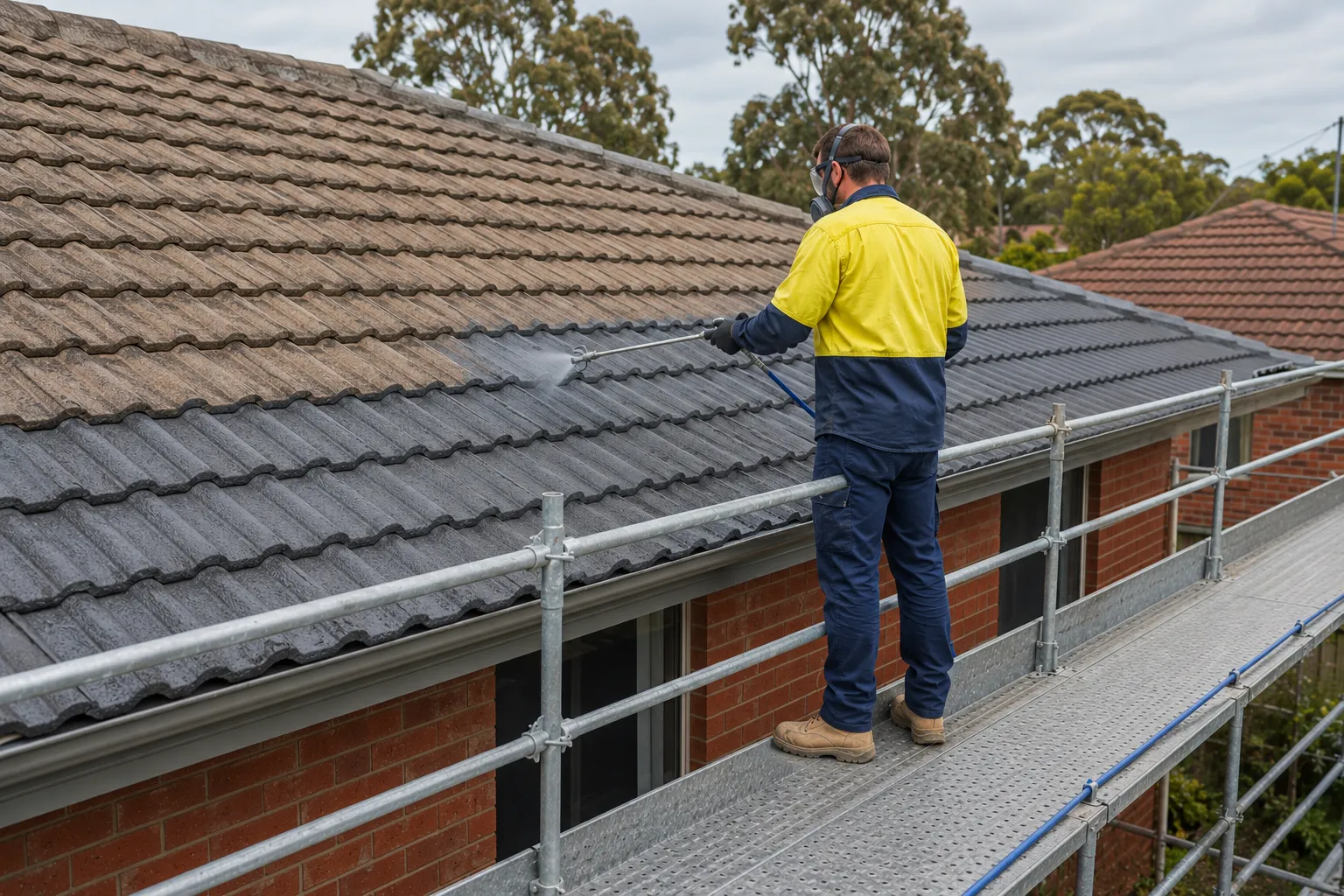
Once the roof has been cleaned, repaired and prepared, the coating can be applied. The aim is to create an even protective layer that improves the roof's appearance while providing resistance to UV exposure, moisture and weathering. The application method and number of coats depend on the roofing material, existing condition and selected coating system.
The choice between roof paint and a flexible membrane depends on the roof's condition and performance requirements. Roof paint may be suitable for sound concrete tiles, metal roofs and previously coated surfaces, while a membrane may be preferred where greater flexibility or crack-bridging performance is required.
Application involves:
On metal roofs, areas of exposed or treated steel may require an appropriate anti-corrosion primer. Porous or weathered tiles may require a penetrating sealer to create a more stable base for the topcoat.
Each coat should be applied consistently without excessive pooling, thin spots or missed sections. Weather conditions are monitored throughout the process, with painting avoided when conditions could affect drying or adhesion.
Once the final coat has been applied and allowed to cure according to the product requirements, the roof should have a continuous, even finish with no obvious gaps or exposed substrate. Proper application helps the coating withstand changing weather conditions and supports a longer-lasting restoration.
Drying and curing are essential to achieving a durable roof coating. Each layer needs sufficient time to dry before the next coat is applied, while the completed coating must be allowed to cure before the roof is exposed to unnecessary traffic or other work. Rushing these stages can contribute to peeling, blistering, cracking or uneven colour.
Roof coatings become touch-dry before they are necessarily ready for recoating. Drying times vary according to the product, temperature, humidity and roof surface, so the manufacturer's specified recoat time should always take priority.
The roof should remain clean and dry between coats. Applying paint too soon can interfere with adhesion or trap moisture, while excessive exposure before recoating can allow dust and other contaminants to settle on the surface.
Curing allows the coating to develop its intended hardness, durability and resistance to moisture. A roof may feel dry to the touch while the coating underneath is still curing, so unnecessary foot traffic, pressure cleaning and other work should be avoided during this period.
The manufacturer's curing instructions should be followed before heavy cleaning, maintenance work or installation of roof fixtures.
Temperature, humidity, wind and rainfall can all affect roof painting. Dry, moderate conditions are preferable, while rain, high humidity, strong winds and extreme temperatures can interfere with drying and adhesion.
Roof painting should therefore be scheduled around suitable weather conditions and the coating manufacturer's requirements. Allowing sufficient time for each coat to dry and the final finish to cure helps achieve a more consistent result and supports long-term performance.
After the final coat has been applied, the roof should be inspected to confirm the coating is even and continuous across the entire surface. Thin or missed areas may not be obvious from ground level, particularly around ridges, valleys, flashing and roof penetrations.
Each roof section is checked for thin coverage, exposed substrate, uneven colour, runs or excessive coating build-up. Textured tiles, sheet profiles, edges and other areas that can be difficult to coat evenly receive attention.
Ridges, valleys, flashings, penetrations, joins and roof edges are also inspected to ensure the coating forms a continuous protective layer without gaps or exposed areas. Metal roofs are checked around screws and sheet joins, while tiled roofs are inspected around ridge and hip caps and tile profiles.
Any defects or thin areas are corrected once the existing coating has dried sufficiently and the manufacturer's requirements allow further coating. Completing these touch-ups before access equipment is removed helps ensure the finished roof is both visually consistent and adequately protected.
The final inspection confirms that the roof painting has been completed to the required standard. Once the coating has dried sufficiently, the roof is checked for missed areas, thin coverage, uneven colour, runs, overspray and other visible defects. Any necessary touch-ups are completed while access equipment remains available.
The property is then cleaned, including gutters, drainage areas, driveways, paths, gardens and other surfaces affected during the work. Protective coverings, ladders and scaffolding are removed, while paint residue and debris are cleared away.
A final walk-through may also be completed with the homeowner to review the finished result and discuss curing requirements, basic maintenance and applicable product or workmanship warranties. The goal is to leave the property clean, safe and ready for normal use.
A professional roof painting project involves much more than applying a new colour. From assessing the roof and completing necessary repairs to thorough cleaning, preparation, coating and curing, each stage contributes to a durable and long-lasting finish. Careful preparation and the right coating system can help protect the roof from harsh weather while improving its appearance and serviceable life.
Town and Country Roof Restoration understands the importance of getting each stage right. By combining proper preparation, suitable coatings and careful attention to application and weather conditions, roof painting can be a practical maintenance investment that enhances street appeal, protects roofing materials and supports the home's long-term performance.
No job and no roof is too big for our team of roofing contractors. We have the experience, skills and equipment to make your roof look and function the way you’d like it to.
Whether you want to paint your roof or remove asbestos, we can help!

